The textile industries : a practical guide to fibres, yarns & fabrics in every branch of textile manufacture, including preparation of fibres, spinning, doubling, designing, weaving, bleaching, printing, dyeing and finishing (1910)
Murphy, William S · London : The Gresham Publishing Company · leaf 94
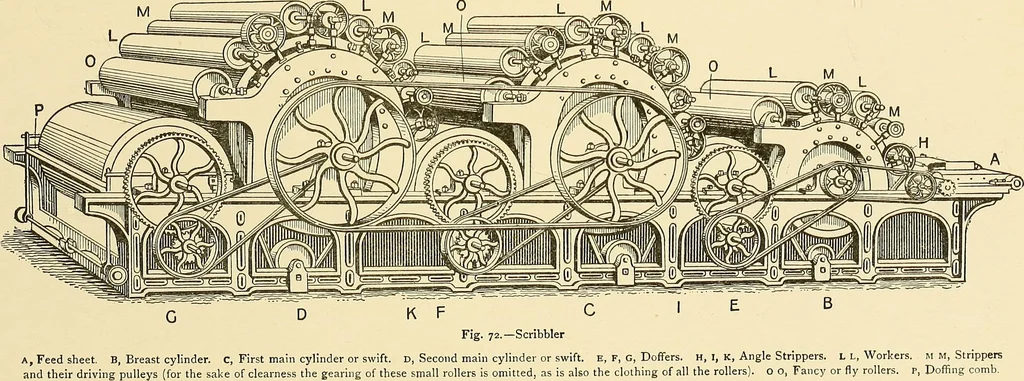
needed.Many explanations arepossible. For example,the fibres in one stapleof wool vary considerablyin length; to lay themparallel the fibres mustbe drawn out to their fulllength. If the cardingrollers were to draw outthe longer fibres fully,the shorter fibres woulddrop out and cause end-less… … 68 THE PREPARATION OF TEXTILE FIBRES The Wool-carding Engine.—The first carder, better known in thetrade as the scribbler (fig. 72), is the typical and representative wool-carding engine. One of the largest and heaviest of textile machines,it is also one of the most efficient. The scribbler…
Textile industry · Textile fabrics
Internet Archive · UMass Dartmouth, Claire T. Carney Library · Public Domain Mark 1.0. Free to use for anything.