The textile industries : a practical guide to fibres, yarns & fabrics in every branch of textile manufacture, including preparation of fibres, spinning, doubling, designing, weaving, bleaching, printing, dyeing and finishing (1910)
Murphy, William S · London : The Gresham Publishing Company · leaf 147
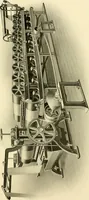
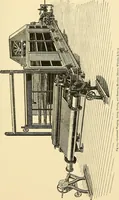
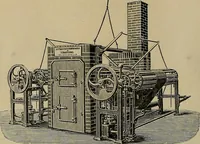
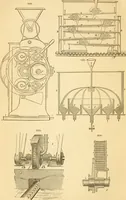
Raising is done in various styles, but there are two great divisions,the wet raising and dry raising. Wet raising is employed for suchgoods as doeskins, beavers, &c., where the weave is not shown. Whenwet-raised goods are shorn, only loose, straggling threads are removed,as the pile raised lies… … Dry raising gives a more pronounced pile, and shows the pattern.It also gives a short pile in shearing. The most important points to be considered by the raiser are these:I, quality and character of the wool; 2, counts of the warp and weft;3, the kind of weave; 4, the effect desired when the cloth…
Textile industry · Textile fabrics
Internet Archive · UMass Dartmouth, Claire T. Carney Library · Public Domain Mark 1.0. Free to use for anything.