The theory and practice of modern framed structures : designed for the use of schools, and for engineers in professional practice (1897)
Johnson, J. B. (John Butler), 1850-1902, Bryan, C. W. (Charles Walter), 1863-1927, Turneaure, Frederick Eugene, 1886- · New York : J. Wiley & Sons · leaf 188
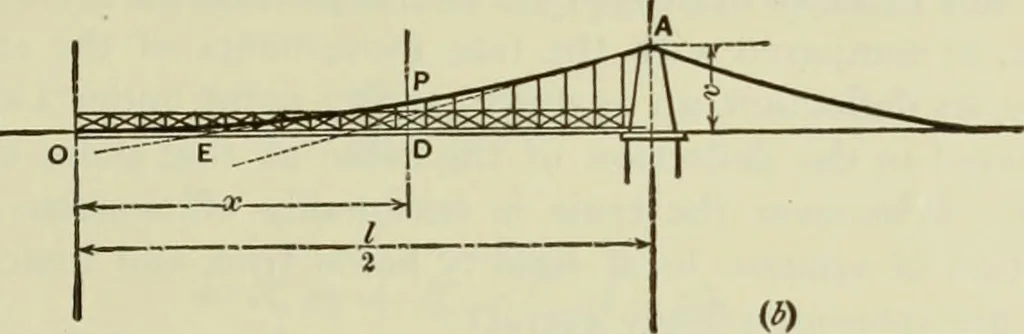
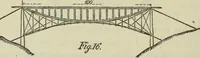
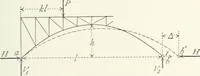
s exceeding 300 or 400feet. If the locality is adapted to the use of metallic arches, these could well be employedfor spans of from 300 to 500 feet. For all spans of greater length than 500 feet for highwaypurposes the suspension type of bridge should perhaps always be employed. THEORY OF… … Fig. 215. Let Fig. 215 {d) represent a suspension-bridge uniformly loaded with a dead load w and alive load p per foot. Let / = span, and v — sag, or versed sine of curve. In Fig. (^) let theleft half of the bridge be removed and replaced by the force H, this being the stress in onecable at bottom…