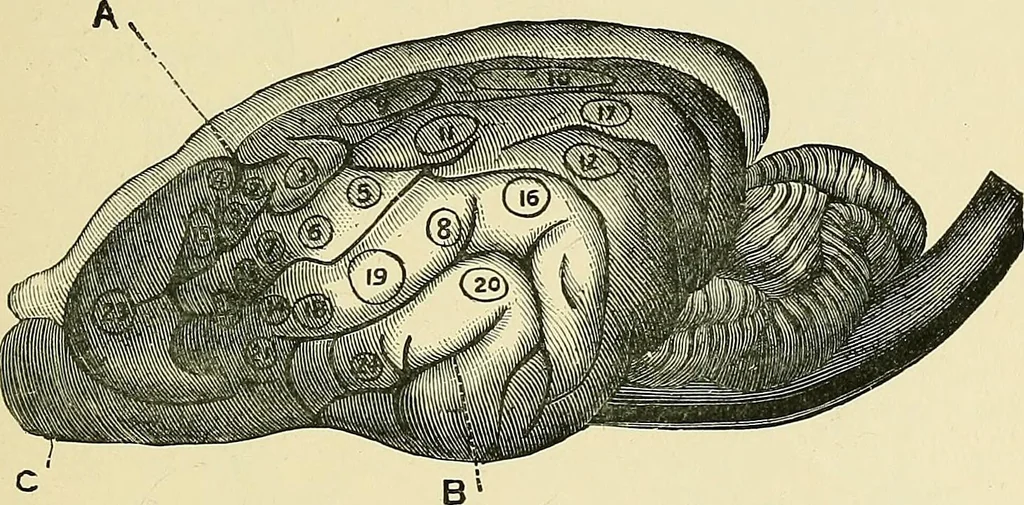
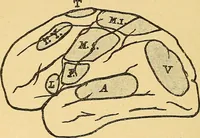
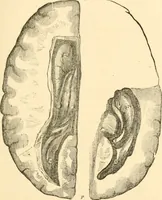
ionsof the Brain. Now let us turn to those on Dogs. Here we are told that there is no movement of the dogsleg comparable to that resulting from irritation of (2) in themonkey; but in the region marked (3) the result of stimula-tion was lateral or wagging motion of the tail. The italics.are… … tail movements from so extended an area was no doubt due to acondition of higher excitability consequent upon long-continuedexploration. This No. 3 or tail centre (p. 258), or centre of lateralor wagging motion of the tail (p. 250), corresponds, accordingto Ferriers homology, to the region to which…
Phrenology
Internet Archive · Medical Heritage Library · Public Domain Mark 1.0. Free to use for anything.