Well's natural philosophy : for the use of schools, academies and privte students, introducing the latest results of scientific discovery and research ; arranged with special reference to the practical application of physical science to the arts and the experiences of everyday life ; with three hundred and seventy-five engravings (1873)
Wells, David A · New York : Ivison, Blakeman, Taylor and Co. · leaf 326
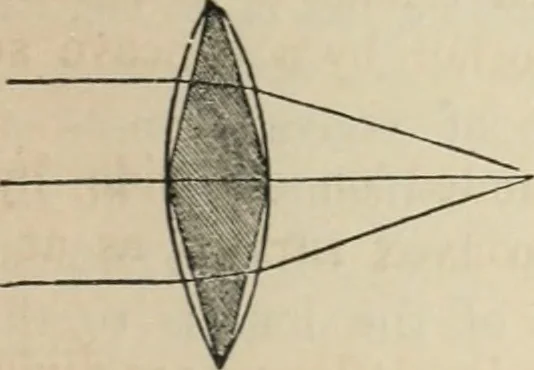
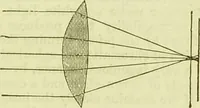
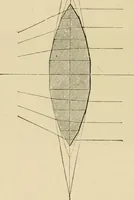
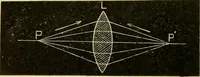
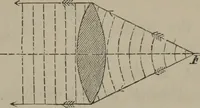
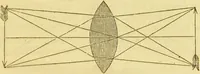
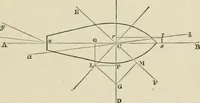
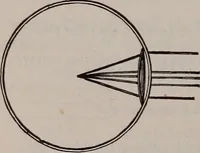
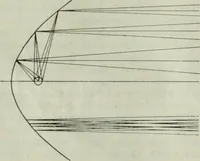
ight refractedby it is always turned toward its back, orthicker part (whether that be turned upward,downward, or to either side), it follows thatwhen parallel rays fall upon a double-convexlens, or two prisms united at their bases, they•will converge to a point. What is the The point where parallel… … What is thefocal disiof a lens ? focal distance j|.g px-jncipal focus, is called the focal distance of a lens. Tliis in a single convex lens is equal to the diameter of the sphere of whichthe lens is a portion ; in a double-convex lens it is equal to the radius, orBemi-diameter of the sphere of…
Physics · Science · Technology
Internet Archive · University of Toronto Libraries · Public Domain Mark 1.0. Free to use for anything.