The wonders of the heavens, being a popular view of astronomy, including a full illustration of the mechanism of the heavens; embracing the sun, moon, and stars, with descriptions of the planets, comets, fixed stars, double stars, the constellations, the galaxy, or milky-way, the zodiacal light, aurora borealis, or norhtern lights, meteors, clouds, falling stars, aërolites, &c (1837)
Bradford, Duncan. [from old catalog] · Boston, American stationers company · leaf 114
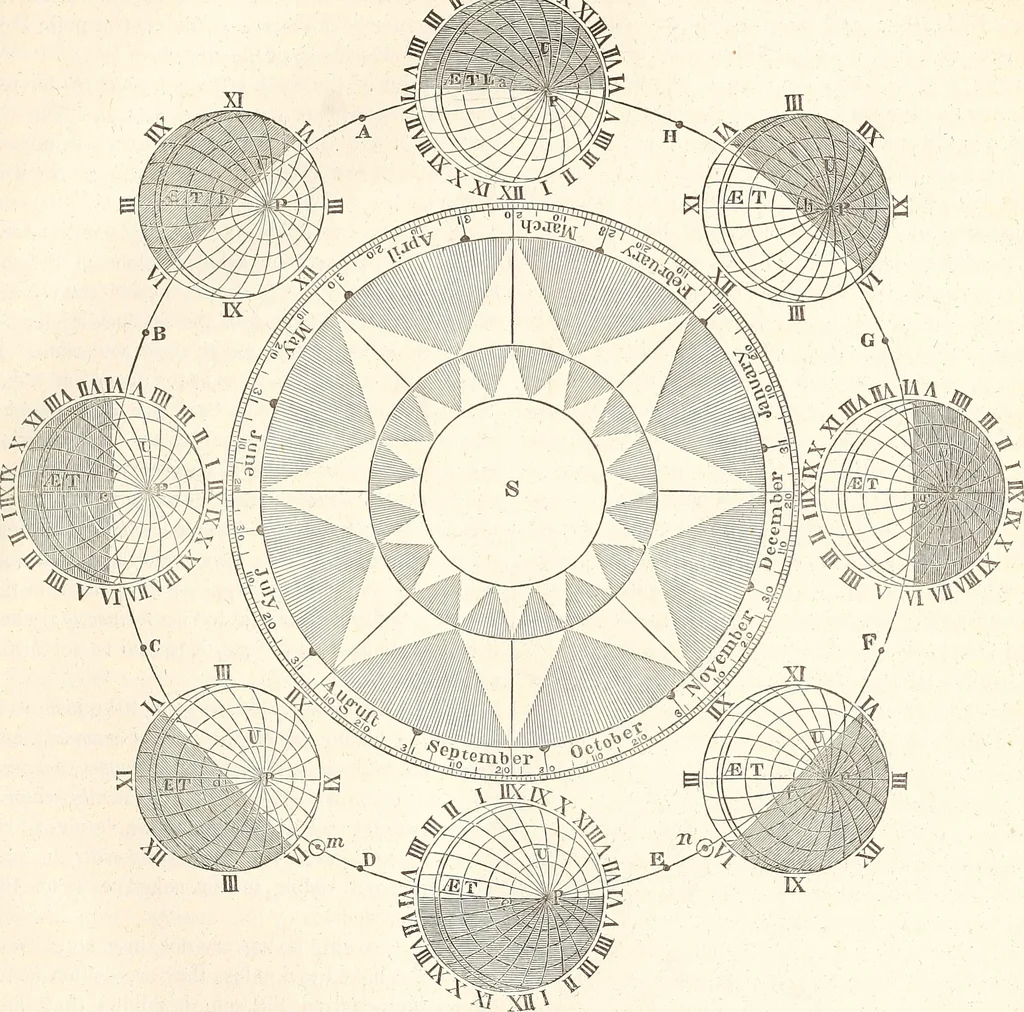
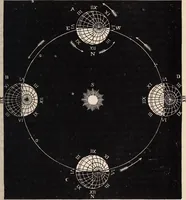
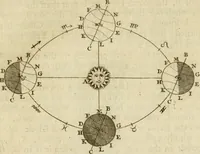
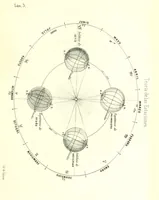
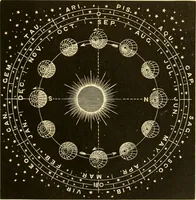
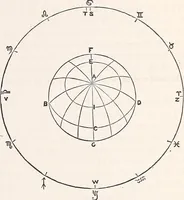
igure is enough to show,that as the earth advances, the north pole recedestowards the dark, which causes the days to de-crease and the nights to increase in length, till theearth comes to the beginning of the Ram, and thenthey are equal, as before; for the boundary of lightand darkness cuts the… … 80 WONDERS OF THE HEAVENS September till the 20th of March. In the middlebetween these times, viz. on the 22d of December,the north pole is as far as it can be in the dark,which is twenty-three and a half degrees, equal tothe inclination of the earths axis from a perpendicu-lar to its orbit: and…
Astronomy
Internet Archive · Library of Congress · Public Domain Mark 1.0. Free to use for anything.