The wonders of the heavens, being a popular view of astronomy, including a full illustration of the mechanism of the heavens; embracing the sun, moon, and stars, with descriptions of the planets, comets, fixed stars, double stars, the constellations, the galaxy, or milky-way, the zodiacal light, aurora borealis, or norhtern lights, meteors, clouds, falling stars, aërolites, &c (1837)
Bradford, Duncan. [from old catalog] · Boston, American stationers company · leaf 152
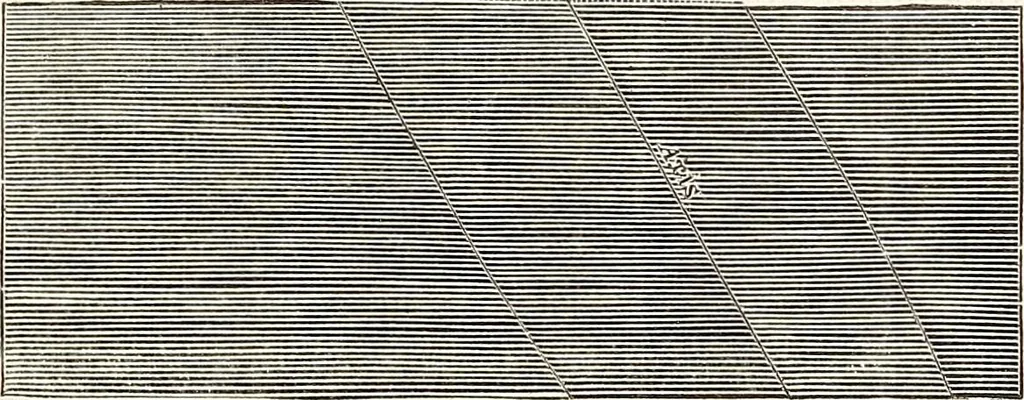
It resembles a triangular beam of light, rounded alittle at the vertex. Its base is turned towards thesun, and its axis is inclined to the horizon, and liesin the direction of the zodiac. The vertical angleof this luminous cone is sometimes twenty-six de-grees and sometimes ten degrees; its length,… … long, and whose horizontal breadth was from eightdegrees to thirty degrees. The best time for see-ing the zodiacal light is about the first of March, at seven oclock in the evening, when the twilight isending, and the equinoctial point in the horizon.The luminous triangle will then appear to…
Astronomy
Internet Archive · Library of Congress · Public Domain Mark 1.0. Free to use for anything.