The wonders of the heavens, being a popular view of astronomy, including a full illustration of the mechanism of the heavens; embracing the sun, moon, and stars, with descriptions of the planets, comets, fixed stars, double stars, the constellations, the galaxy, or milky-way, the zodiacal light, aurora borealis, or norhtern lights, meteors, clouds, falling stars, aërolites, &c (1837)
Bradford, Duncan. [from old catalog] · Boston, American stationers company · leaf 155
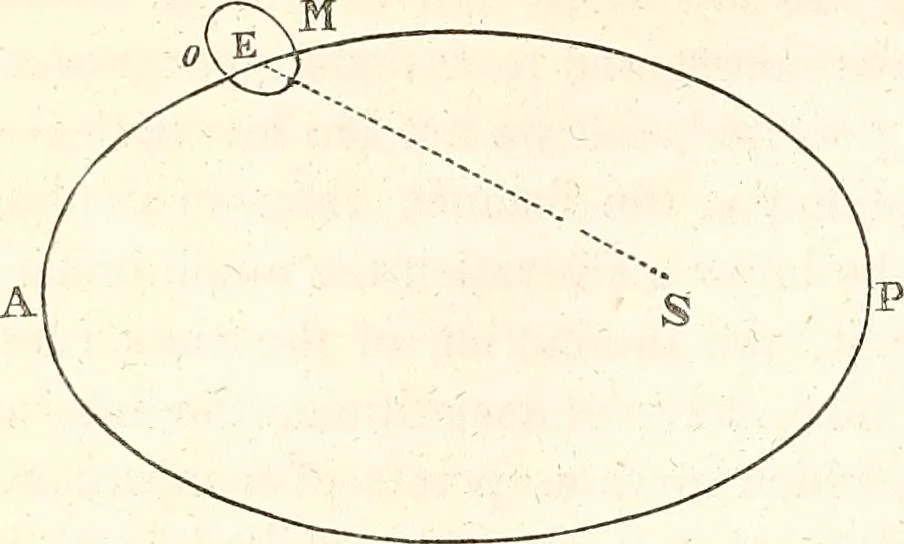
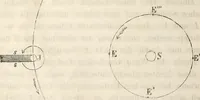
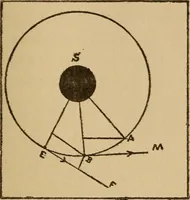
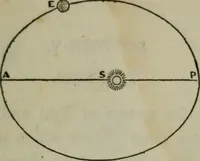
erwise, theerror may be corrected by looking at that bodythrough a tube or a smoked glass, so fixed as toconceal all other objects which might serve asterms of comparison. From the apparent diameters of the moon wemay deduce the variations of its radius vector, or of 120 WONDERS OF THE HEAVENS. its… … an ellipse MO about the earth E, situated in oneof its foci. This ellipse is movable, being carriedwith the earth around the sun every year; themoon in the mean time going through its ellipsethirteen and a half times. By measuring thegreatest latitude of the moon, it has been foundthat its orbit is…
Astronomy
Internet Archive · Library of Congress · Public Domain Mark 1.0. Free to use for anything.