The wonders of the heavens, being a popular view of astronomy, including a full illustration of the mechanism of the heavens; embracing the sun, moon, and stars, with descriptions of the planets, comets, fixed stars, double stars, the constellations, the galaxy, or milky-way, the zodiacal light, aurora borealis, or norhtern lights, meteors, clouds, falling stars, aërolites, &c (1837)
Bradford, Duncan. [from old catalog] · Boston, American stationers company · leaf 205
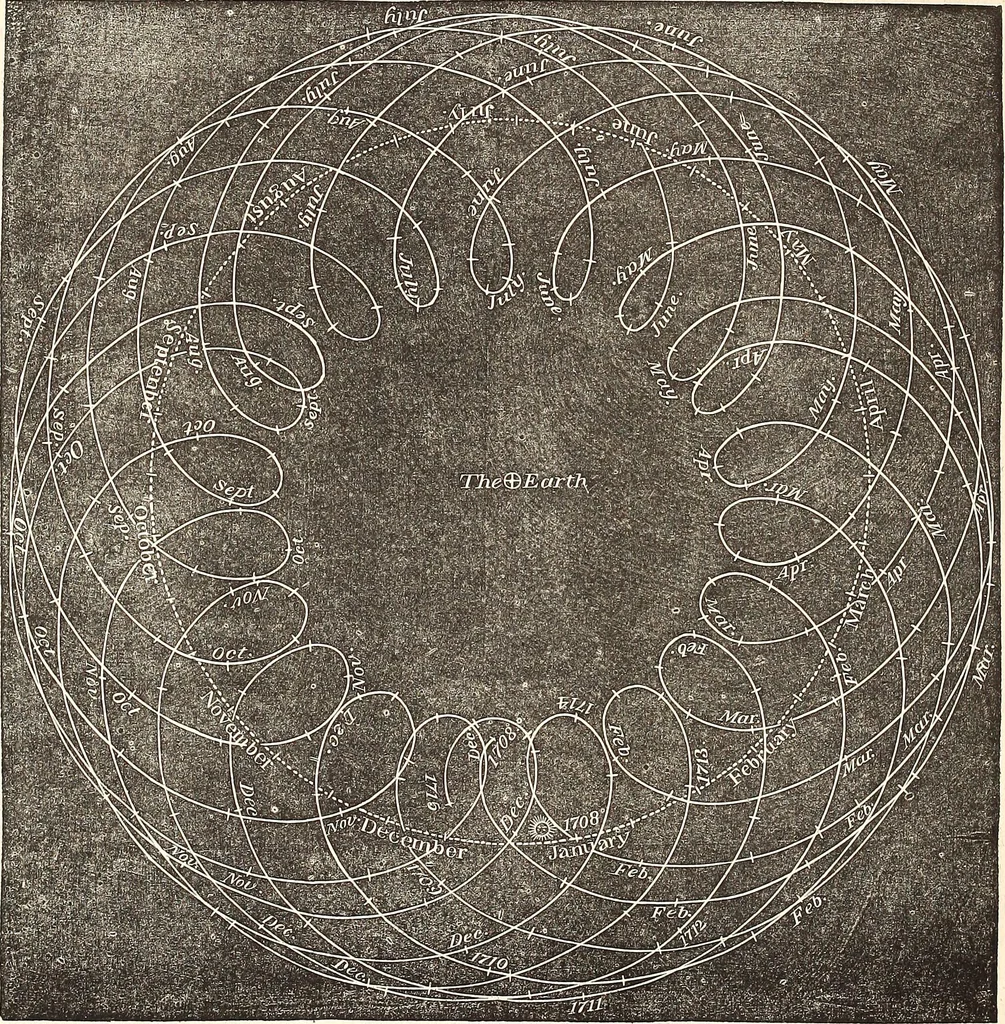
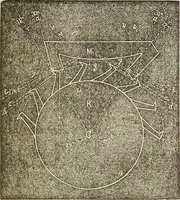
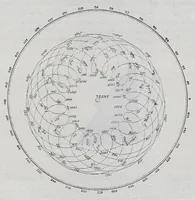
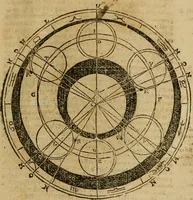
ts apparent place in the sphere of theheavens, its stations, direct motions, and retrogra-dations, and measure its disc frequently with the micrometer, we shall find that the planet at timescomes nearer to us, and at others recedes furtherfrom us, in such a manner that, taking the wholeof its… … motions of Mercury must be if the earth has noreal motion. The earth is placed in the centre, asit always appears to be. The curved and loopedline, marked with the names of the months abbre-viated, shows the motion of Mercury, such as it appears to an observer on the earth, for seven suc-cessive…
Astronomy
Internet Archive · Library of Congress · Public Domain Mark 1.0. Free to use for anything.