The wonders of the heavens, being a popular view of astronomy, including a full illustration of the mechanism of the heavens; embracing the sun, moon, and stars, with descriptions of the planets, comets, fixed stars, double stars, the constellations, the galaxy, or milky-way, the zodiacal light, aurora borealis, or norhtern lights, meteors, clouds, falling stars, aërolites, &c (1837)
Bradford, Duncan. [from old catalog] · Boston, American stationers company · leaf 21
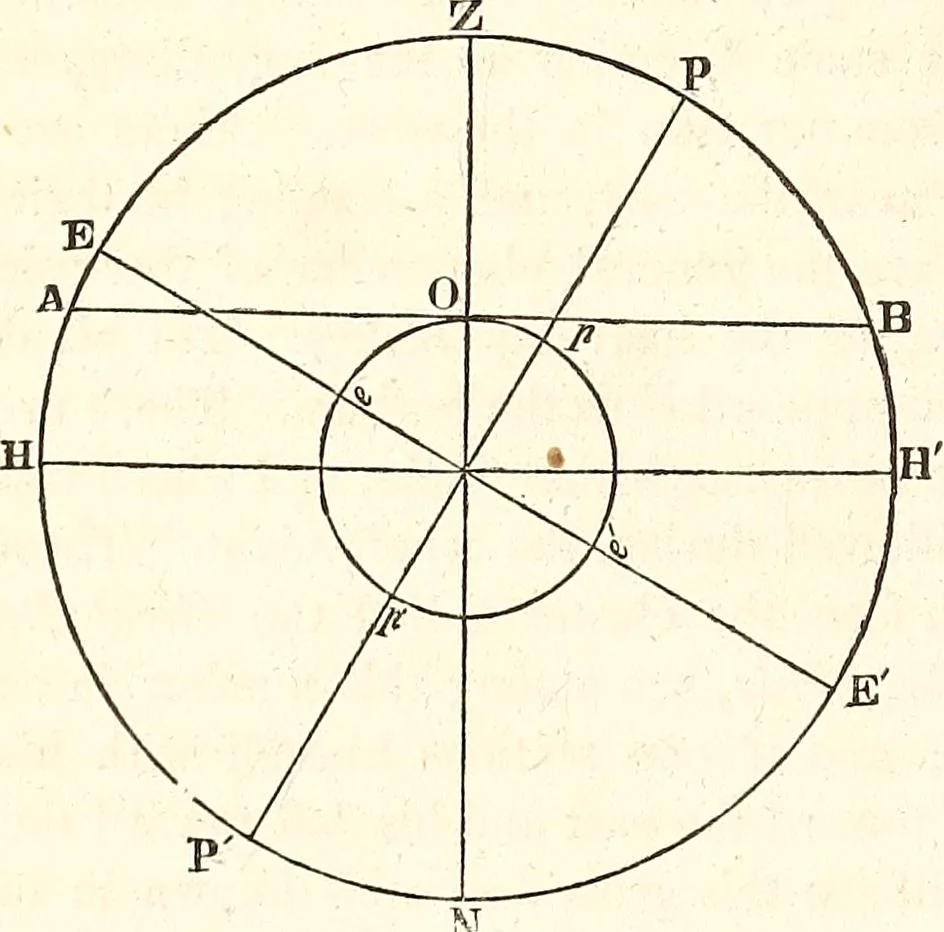
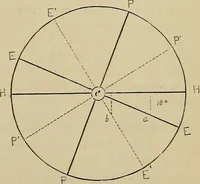
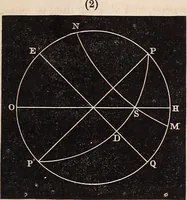
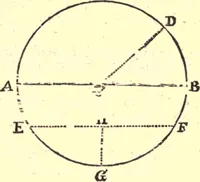
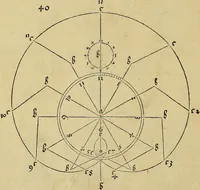
hatwhich is diametrically opposite, and which we can-not perceive, the southern or Antarctic pole. Wemust be careful not to confound these two pointswith that situated directly over our head and itsopposite, the first of which is the zenith, the lastthe nadir. Every point on the surface of the… … poles of the heaven, p and p the poles of theearth; Z is the zenith and N the nadir of the ob-server at 0. If the observer were at e, his zenithwould be E and his nadir E. If now a plane, A B, be imagined tangent to thesurface of the earth at 0, it will represent the sensi-ble horizon of a…
Astronomy
Internet Archive · Library of Congress · Public Domain Mark 1.0. Free to use for anything.