The wonders of the heavens, being a popular view of astronomy, including a full illustration of the mechanism of the heavens; embracing the sun, moon, and stars, with descriptions of the planets, comets, fixed stars, double stars, the constellations, the galaxy, or milky-way, the zodiacal light, aurora borealis, or norhtern lights, meteors, clouds, falling stars, aërolites, &c (1837)
Bradford, Duncan. [from old catalog] · Boston, American stationers company · leaf 217
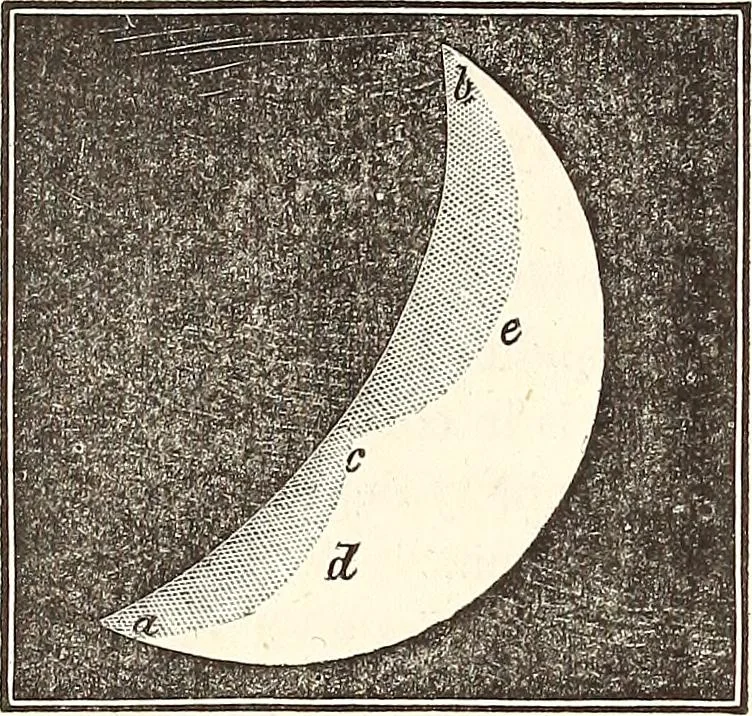
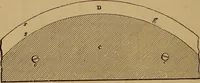
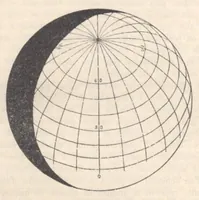
ances happen very seldom. Excepting such transitsas these, this planet shows the same appearances tous regularly every eight years, its conjunctions,elongations, and times of rising and setting, being WMMI ■tlllT-nnmi.--J.r.^;n^-jT 168 WONDERS OF THE HEAVENS very nearly the same, on the same days,… … represented in the figure: a c? c is a bluish spot, andceb Q. brighter spot. They met in an angle at apoint c, distant from the cusp a about one third ofthe planets diameter. This astronomer also ob-served that Venus was much brighter round itslimb than in that part which separates the enlight-ened…
Astronomy
Internet Archive · Library of Congress · Public Domain Mark 1.0. Free to use for anything.