The wonders of the heavens, being a popular view of astronomy, including a full illustration of the mechanism of the heavens; embracing the sun, moon, and stars, with descriptions of the planets, comets, fixed stars, double stars, the constellations, the galaxy, or milky-way, the zodiacal light, aurora borealis, or norhtern lights, meteors, clouds, falling stars, aërolites, &c (1837)
Bradford, Duncan. [from old catalog] · Boston, American stationers company · leaf 220
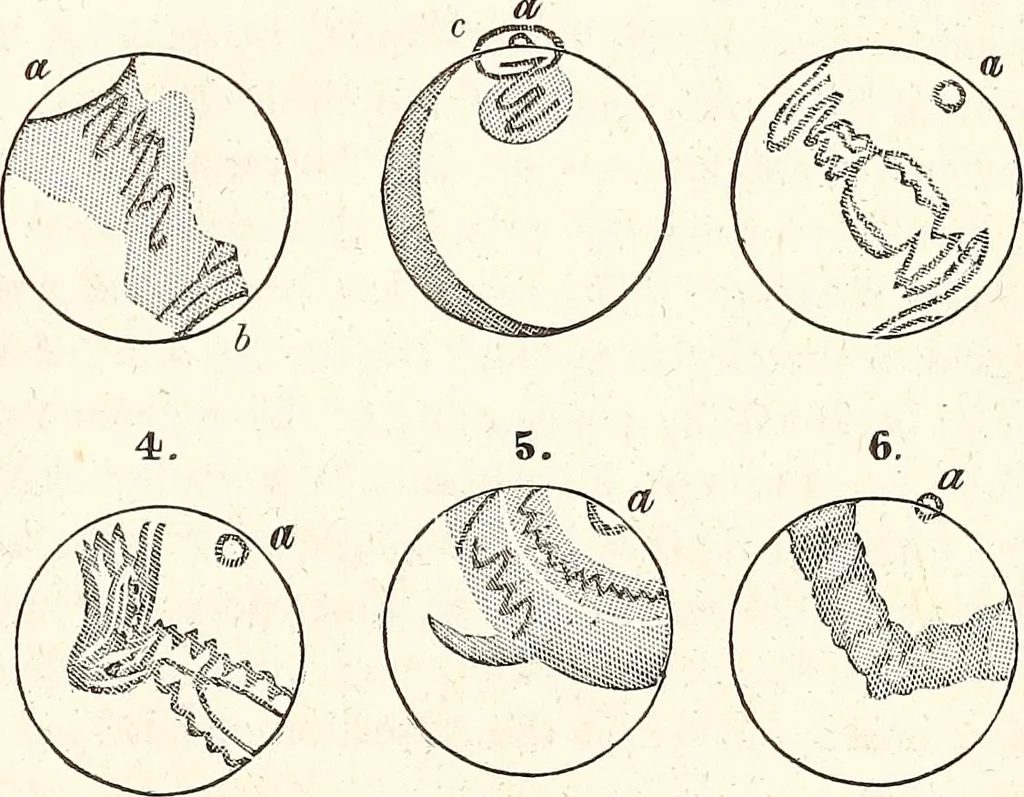
its disc, was joined hy a shorter belt, forming withit an obtuse angle. By the motion of this angularpoint, Maraldi found its daily period to be twenty-four hours and forty minutes—the very same withthat of Cassini. These luminous spots were ob-served, from 1777 to 1783, by Herschel, who,…
Astronomy
Internet Archive · Library of Congress · Public Domain Mark 1.0. Free to use for anything.