The wonders of the heavens, being a popular view of astronomy, including a full illustration of the mechanism of the heavens; embracing the sun, moon, and stars, with descriptions of the planets, comets, fixed stars, double stars, the constellations, the galaxy, or milky-way, the zodiacal light, aurora borealis, or norhtern lights, meteors, clouds, falling stars, aërolites, &c (1837)
Bradford, Duncan. [from old catalog] · Boston, American stationers company · leaf 232
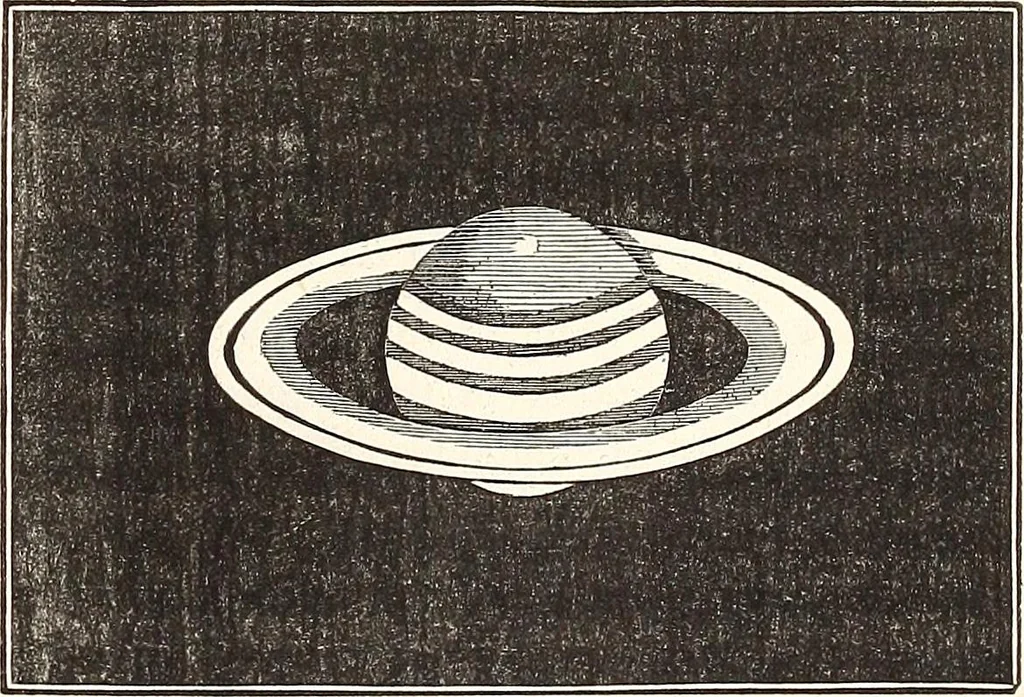
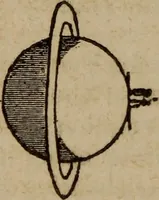
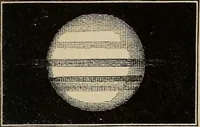
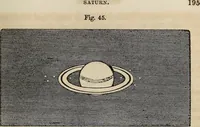
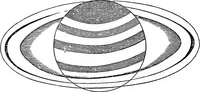
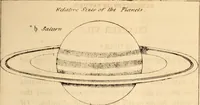
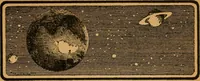
ntre;for then it can reflect no light to us. Again, wecannot see it when its plane passes through thesun; for then only its edge is illuminated, and, asit is very thin, it cannot reflect light enough torender it visible to us. Yet, if very powerful tele-scopes be used, the edge can be seen, and… … planet, is an opaque body; for when the illuminatedsurface of the ring is inclined to the earth, as in 184 WONDERS OF THE HEAVENS. the figure, it projects a perceptible shadow on theglobe of Saturn. This figure represents the planetsurrounded by its rings, and having its body stripedwith dark…
Astronomy
Internet Archive · Library of Congress · Public Domain Mark 1.0. Free to use for anything.