The wonders of the heavens, being a popular view of astronomy, including a full illustration of the mechanism of the heavens; embracing the sun, moon, and stars, with descriptions of the planets, comets, fixed stars, double stars, the constellations, the galaxy, or milky-way, the zodiacal light, aurora borealis, or norhtern lights, meteors, clouds, falling stars, aërolites, &c (1837)
Bradford, Duncan. [from old catalog] · Boston, American stationers company · leaf 240
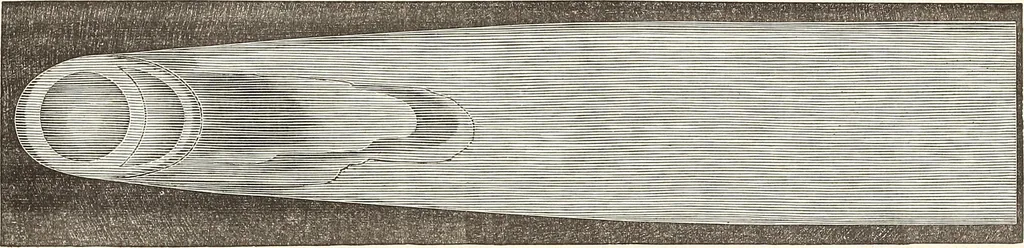
grees. Its length exceeded ninety-six millions ofmiles. The tail is by no means an invariable appendageof comets. The smallest, such as are visible onlyin telescopes, or with difficulty by the naked eye. EttiMSJLJmx.rTmia^vsjurjs.Ai.s^vmai ^11.1 ■■■ wnKtmrnmmm^ n»JMgia.BaMgg.j»tBre WONDERS OF THE… … and some of the brightest have been observed tohave short and feeble tails, or to be wholly withoutthem. Those of 1585, and 1763, offered no traceof such an appendage ; and Cassini describes thecomet of 1682 as being round and bright likeJupiter. Every hairy star which passed successivelythrough…
Astronomy
Internet Archive · Library of Congress · Public Domain Mark 1.0. Free to use for anything.