The wonders of the heavens, being a popular view of astronomy, including a full illustration of the mechanism of the heavens; embracing the sun, moon, and stars, with descriptions of the planets, comets, fixed stars, double stars, the constellations, the galaxy, or milky-way, the zodiacal light, aurora borealis, or norhtern lights, meteors, clouds, falling stars, aërolites, &c (1837)
Bradford, Duncan. [from old catalog] · Boston, American stationers company · leaf 291
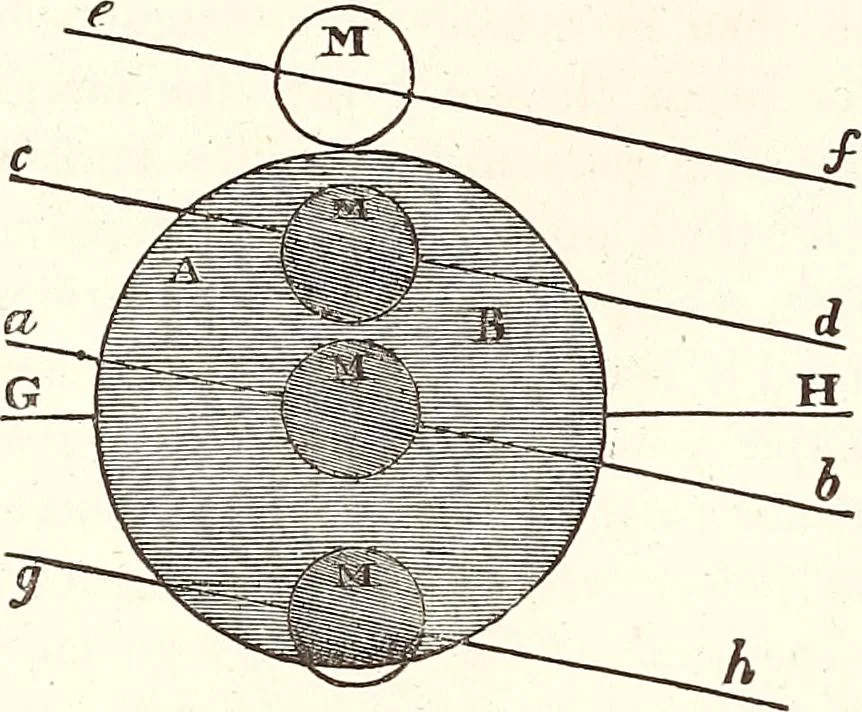
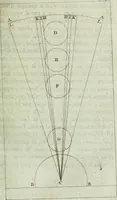
clipsedin the horizon when the sun was also visible in theopposite part of it, for, the horizontal refractionbeing almost thirty-four minutes of a degree, andthe diameter of the sun and moon being each at amean state but thirty-two minutes, the refractioncauses both luminaries to appear above the… … ecliptic, ef the moons orbit where it is twelvedegrees from the node at its full, c d its orbitwhere it is six degrees from the node, a b its orbitwhere it is full in the node, A B the earthsshadow, and M the moon. When the moondescribes the line ef, it just touches the shadow,but does not enter…
Astronomy
Internet Archive · Library of Congress · Public Domain Mark 1.0. Free to use for anything.