The wonders of the heavens, being a popular view of astronomy, including a full illustration of the mechanism of the heavens; embracing the sun, moon, and stars, with descriptions of the planets, comets, fixed stars, double stars, the constellations, the galaxy, or milky-way, the zodiacal light, aurora borealis, or norhtern lights, meteors, clouds, falling stars, aërolites, &c (1837)
Bradford, Duncan. [from old catalog] · Boston, American stationers company · leaf 301
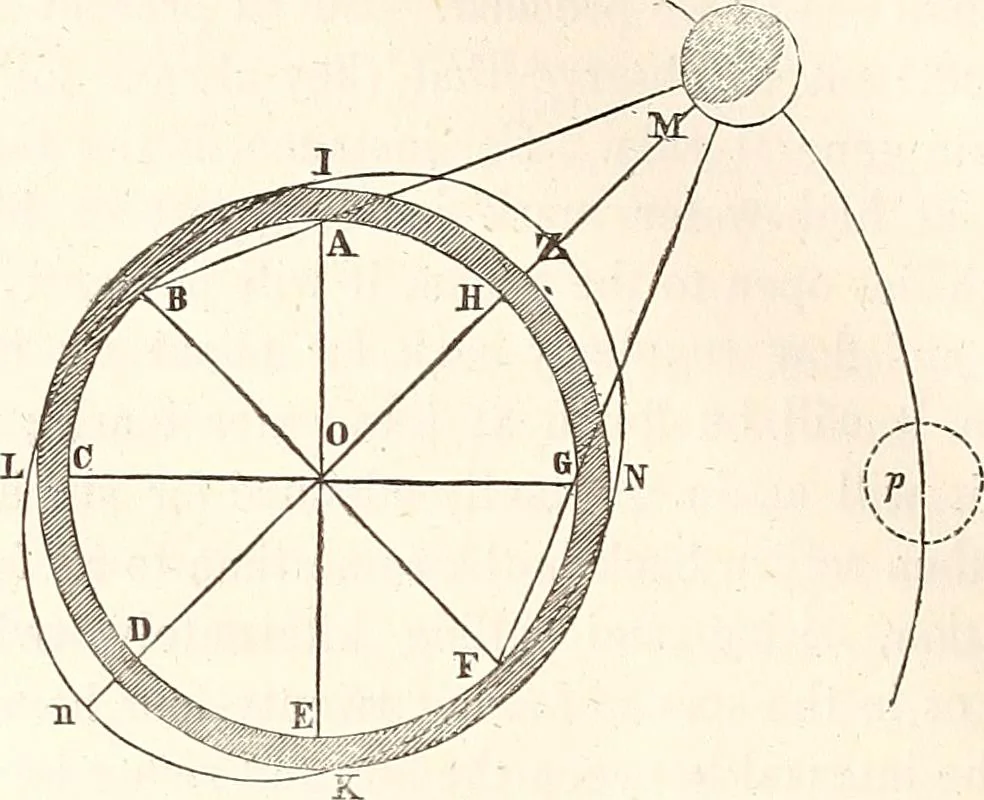
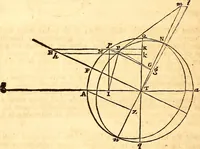
otion, which act equally on all its parti-cles, would cause any disturbance in this state ofequilibrium, reason teaches us that it is to theaction of some external force we are to look for thecause of the tides, and a little attention to thenature of the moons attraction will convince us thatwe are… … on the side of the earth ABCDEFGH next themoon M are more attracted than the central partsof the earth 0 by the moon, and the central partsare more attracted by her than the waters on theopposite side of the earth at n, and therefore thedistance between the earths centre and the waterson its…
Astronomy
Internet Archive · Library of Congress · Public Domain Mark 1.0. Free to use for anything.