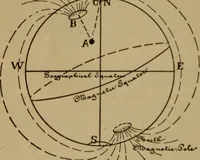
The wonders of the heavens, being a popular view of astronomy, including a full illustration of the mechanism of the heavens; embracing the sun, moon, and stars, with descriptions of the planets, comets, fixed stars, double stars, the constellations, the galaxy, or milky-way, the zodiacal light, aurora borealis, or norhtern lights, meteors, clouds, falling stars, aërolites, &c (1837)
Bradford, Duncan. [from old catalog] · Boston, American stationers company · leaf 303
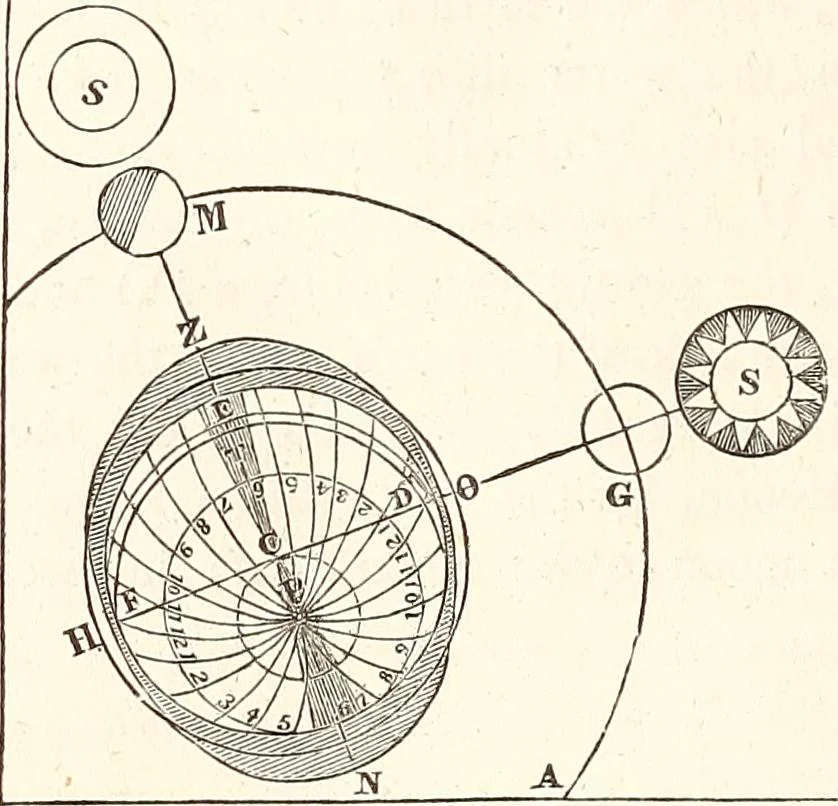
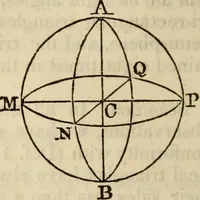
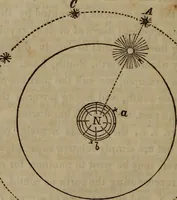
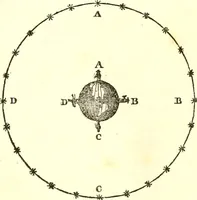
rac-tive forces of the sun and moon being united, theydiminish the gravity of the waters under the moon,and their gravity on the opposite side is diminishedby means of a greater centrifugal force. At thefull, whilst the moon raises the tide under andopposite to her, the sun, acting in the same… … waters at 0 and H diminishes the effect of themoons action on the waters at Z and N, so thatthey rise a little under and opposite to the sun at 0and H, and fall as much under and opposite to themoon at Z and N, making what we call the neaptides, because the sun and moon then act cross-wiseto each…
Astronomy
Internet Archive · Library of Congress · Public Domain Mark 1.0. Free to use for anything.