The wonders of the heavens, being a popular view of astronomy, including a full illustration of the mechanism of the heavens; embracing the sun, moon, and stars, with descriptions of the planets, comets, fixed stars, double stars, the constellations, the galaxy, or milky-way, the zodiacal light, aurora borealis, or norhtern lights, meteors, clouds, falling stars, aërolites, &c (1837)
Bradford, Duncan. [from old catalog] · Boston, American stationers company · leaf 314
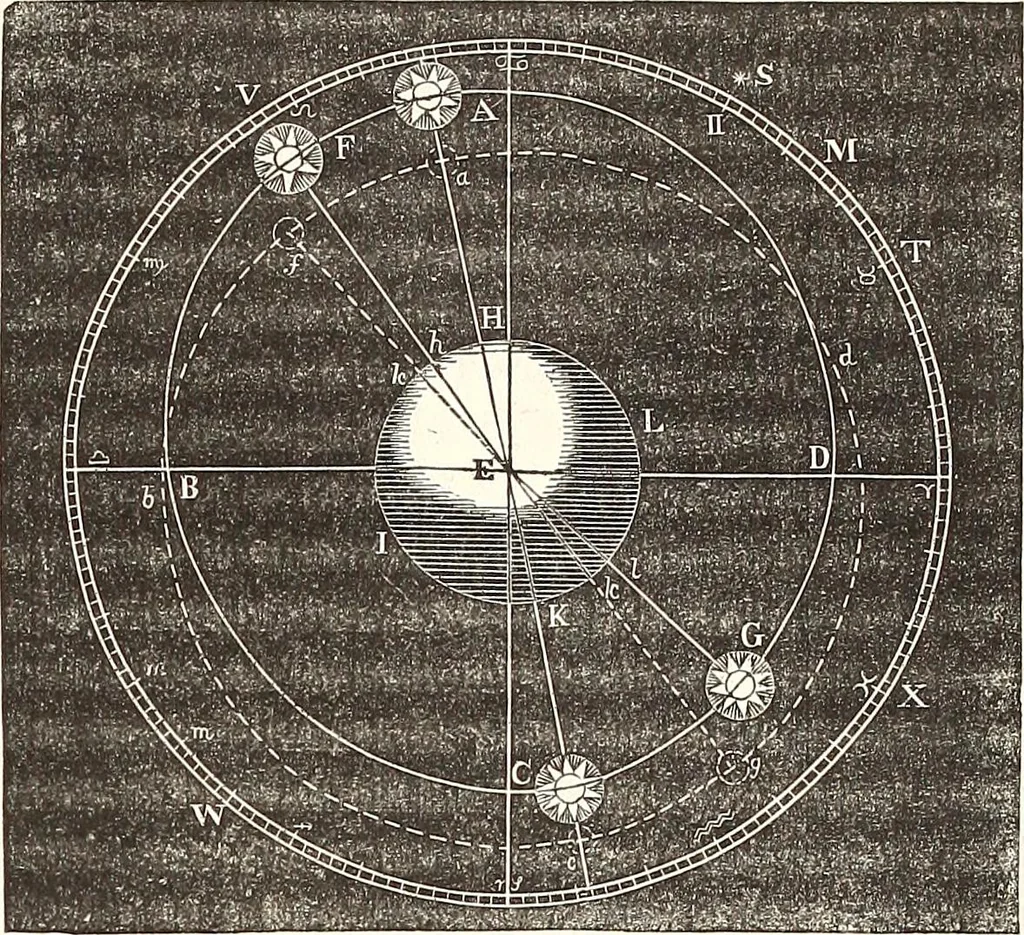
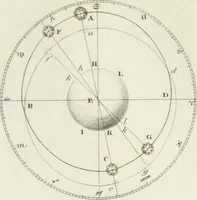
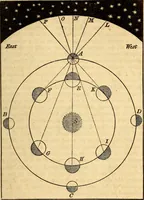
e sunswould come sooner or later to the meridian thanthe other as it happened to be behind or beforethe other, and when they were both in conjunctionthey would come to the meridian at the samemoment. As the real sun moves unequably in the ecliptic, let us suppose a fictitious sun to move equably in… … round in a year according to the order of letters,or from west to east. Let H IK L be the earthturning round its axis the same wscy every twenty-four hours; and suppose both suns to start from A.and a in a right line with the plane of the meridianE H at the same moment, the real sun at A beingthen…
Astronomy
Internet Archive · Library of Congress · Public Domain Mark 1.0. Free to use for anything.