The wonders of the heavens, being a popular view of astronomy, including a full illustration of the mechanism of the heavens; embracing the sun, moon, and stars, with descriptions of the planets, comets, fixed stars, double stars, the constellations, the galaxy, or milky-way, the zodiacal light, aurora borealis, or norhtern lights, meteors, clouds, falling stars, aërolites, &c (1837)
Bradford, Duncan. [from old catalog] · Boston, American stationers company · leaf 330
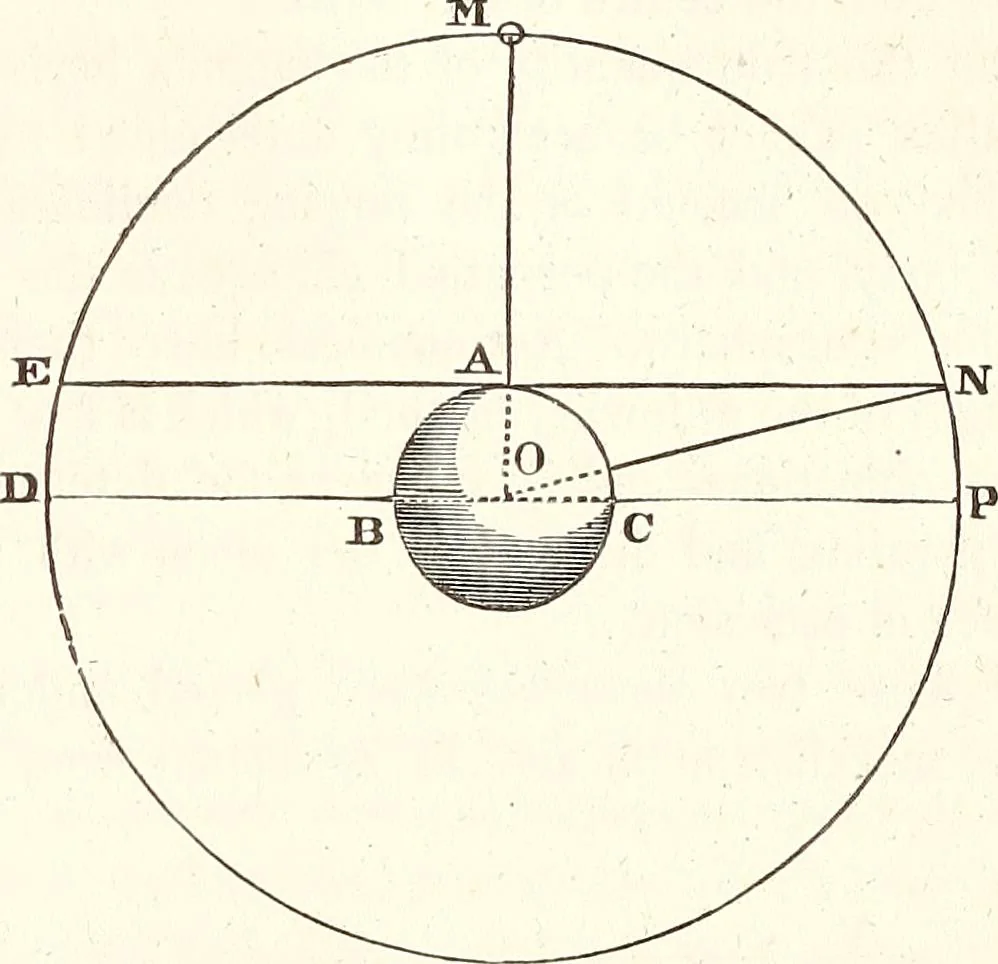
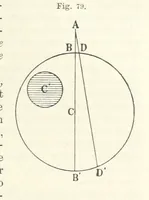
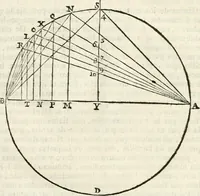
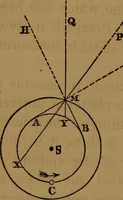
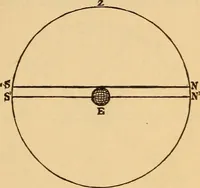
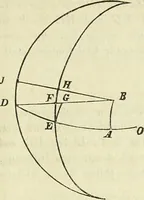
, the firstthing is to find the difference between the moons place when it appears in the horizon to a spectator 36 on the earths surface, and that which it wouldappear to occupy to a person at the earths centre,or, which is the same thing, to find the apparentsemidiameter of the earth to an… … at the time the moon is moving in the celestialequator D M P; then, as the latter circle is in theplane of the former, the moon will pass directlyover his head, and descend perpendicularly to thehorizon E N. In this situation of the spectator atA, the moon will appear to have described a quar-ter…
Astronomy
Internet Archive · Library of Congress · Public Domain Mark 1.0. Free to use for anything.