The wonders of the heavens, being a popular view of astronomy, including a full illustration of the mechanism of the heavens; embracing the sun, moon, and stars, with descriptions of the planets, comets, fixed stars, double stars, the constellations, the galaxy, or milky-way, the zodiacal light, aurora borealis, or norhtern lights, meteors, clouds, falling stars, aërolites, &c (1837)
Bradford, Duncan. [from old catalog] · Boston, American stationers company · leaf 337
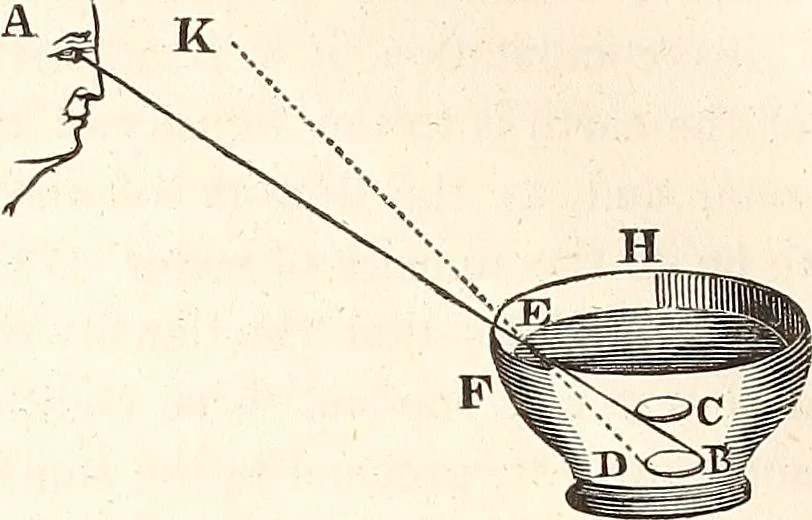
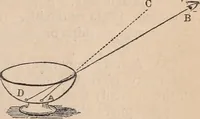
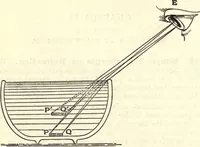
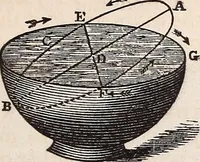
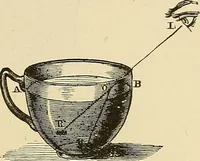
itsfirst course, more or less as it falls more or lessobliquely on the refracting surface which dividesthe two media. This may be proved by severalexperiments: 1st, in a basin FGH put a pieceof money, as D B, and then retire from it, as to A, * Any substance through which light can pass, as water,… … As he fills it, you will see more and more of thepiece D B, which will be all in view when thebasin is full, and appear as if lifted up to C; forthe ray A E B, which was straight whilst the basinwas empty, is now bent at the surface of the waterin E, and turned out of its rectilineal course intothe…
Astronomy
Internet Archive · Library of Congress · Public Domain Mark 1.0. Free to use for anything.