The wonders of the heavens, being a popular view of astronomy, including a full illustration of the mechanism of the heavens; embracing the sun, moon, and stars, with descriptions of the planets, comets, fixed stars, double stars, the constellations, the galaxy, or milky-way, the zodiacal light, aurora borealis, or norhtern lights, meteors, clouds, falling stars, aërolites, &c (1837)
Bradford, Duncan. [from old catalog] · Boston, American stationers company · leaf 338
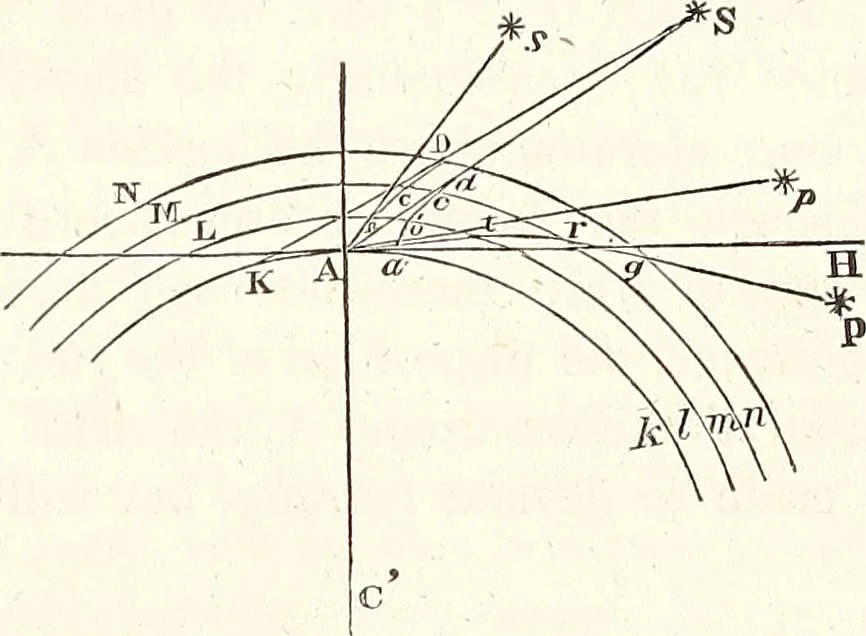
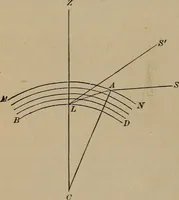
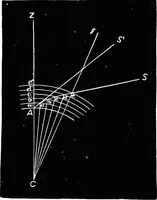
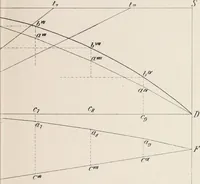
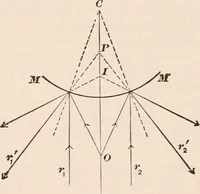
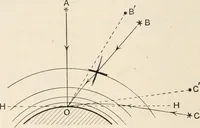
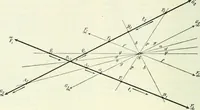
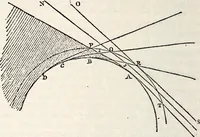
seen obliquelythrough it appear otherwise situated than theywould to the same spectator had the atmosphereno existence. It thus produces a false impressionrespecting their places, which must be rectifiedby ascertaining the amount and direction of thedisplacement so apparently produced on eachbefore… … represent the successive strata or layers of de-creasing density into which we may conceive theatmosphere to be divided, and which are sphericalsurfaces concentric with K^, the earths surface.Let S represent a star, or other heavenly body,beyond the utmost limit of the atmosphere; then,if the air…
Astronomy
Internet Archive · Library of Congress · Public Domain Mark 1.0. Free to use for anything.