The wonders of the heavens, being a popular view of astronomy, including a full illustration of the mechanism of the heavens; embracing the sun, moon, and stars, with descriptions of the planets, comets, fixed stars, double stars, the constellations, the galaxy, or milky-way, the zodiacal light, aurora borealis, or norhtern lights, meteors, clouds, falling stars, aërolites, &c (1837)
Bradford, Duncan. [from old catalog] · Boston, American stationers company · leaf 379
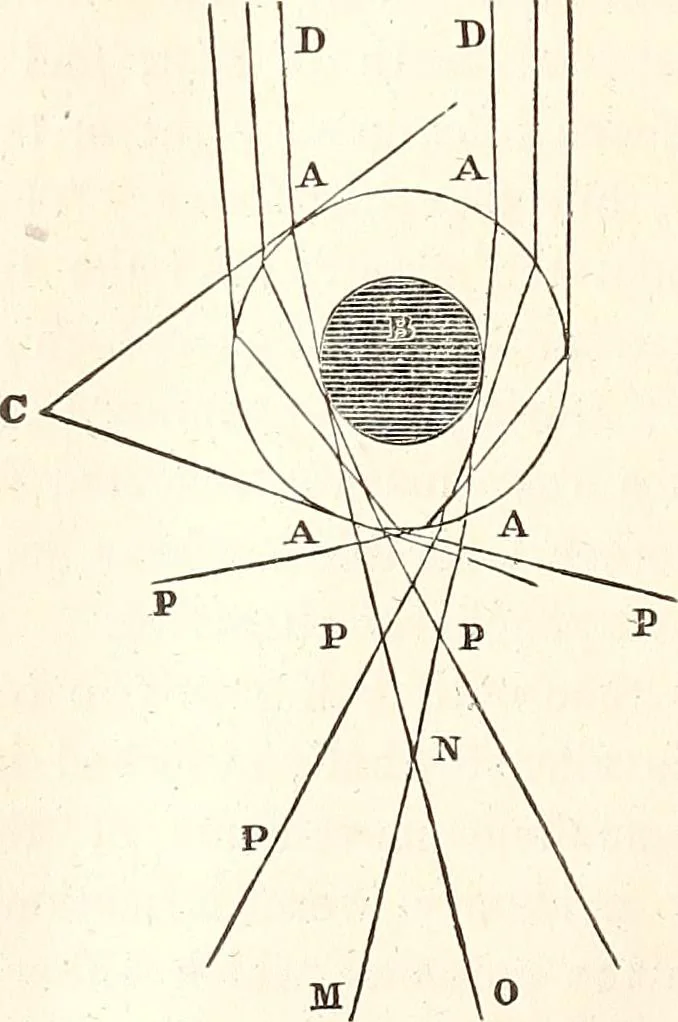
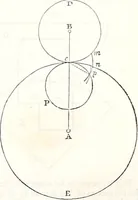
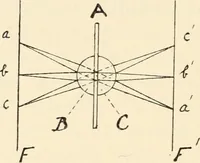
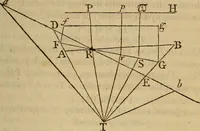
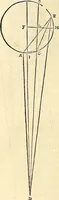
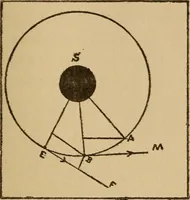
in the same beautyand splendor till about half after ten, when itbegan to fade gradually, continuing visible till twoin the afternoon. Huygens, who was with a largecompany observing the phenomena, made knownhis theory concerning the cause, not only of thehalos, but of the parhelia, which had before… … enclosed in the former as the stone in the cherry;as may be seen in the figure, where A A represents WONDERS OF THE HEAVENS 329 one of these grains, and B the opaque part. Heexplained how some of these little grains (thatswim up and down in the air between us and thesun, being less distant from the…
Astronomy
Internet Archive · Library of Congress · Public Domain Mark 1.0. Free to use for anything.