The wonders of the heavens, being a popular view of astronomy, including a full illustration of the mechanism of the heavens; embracing the sun, moon, and stars, with descriptions of the planets, comets, fixed stars, double stars, the constellations, the galaxy, or milky-way, the zodiacal light, aurora borealis, or norhtern lights, meteors, clouds, falling stars, aërolites, &c (1837)
Bradford, Duncan. [from old catalog] · Boston, American stationers company · leaf 380
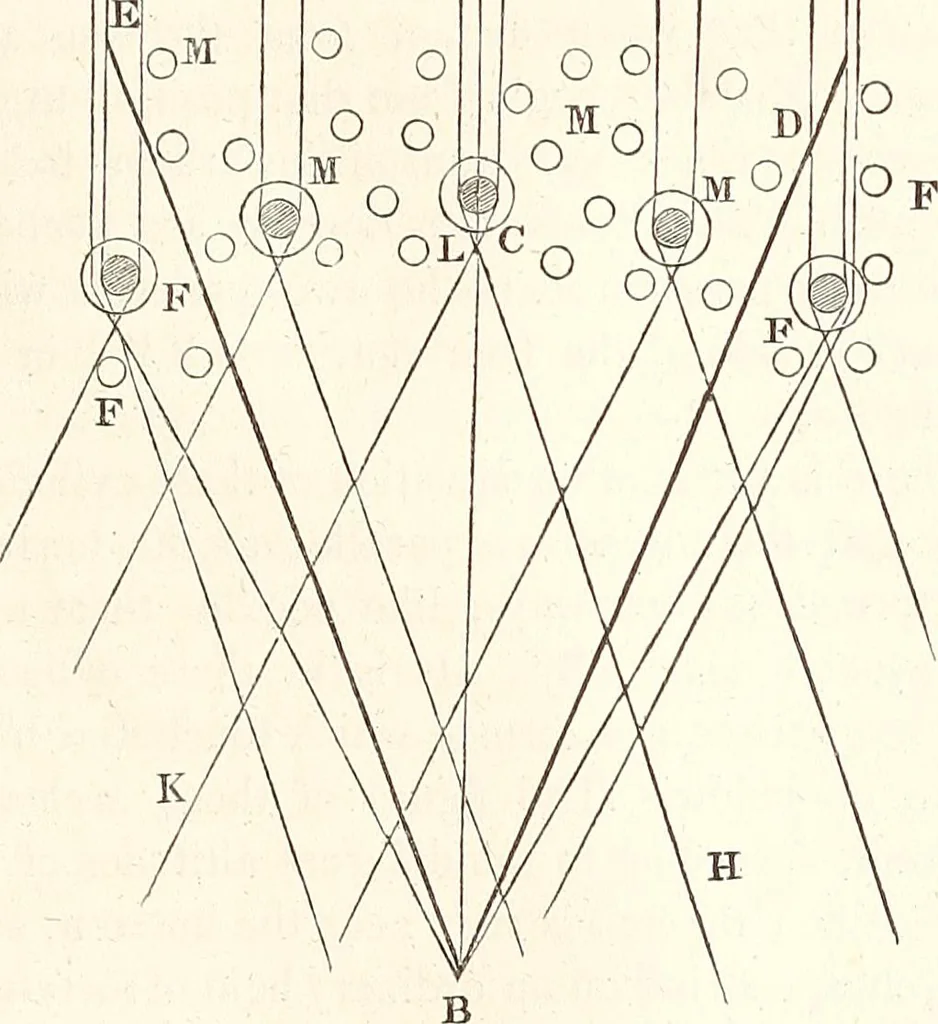
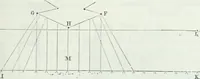
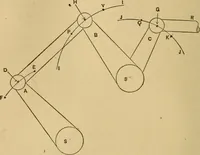
ex-tends from the sun to the eye than a certain angle)necessarily hinder the rays that fall on them fromreaching our eyes, since the opaque part will causebehind every such grain a space of a conical figure,as M N 0, in which the eye of the spectator beingsituated, cannot see the sun through that… … B A the axis drawn from the eye to the sun; C, M, F some of the grains, with their kernels making them semi-opaque. Among these the grain C, being in the axis B A, (the lines C K, L H representing the rays of the sun nearest to the axis, the passage of which is not prevented by the opacity of the…
Astronomy
Internet Archive · Library of Congress · Public Domain Mark 1.0. Free to use for anything.