A Dictionary of science, literature, and art [electronic resource]: comprising the history, description, and scientific principles of every branch of human knowledge; with the derivation and definition of all the terms in general use (1844)
Brande, William Thomas, 1788-1866, Cauvin, Joseph · New York : Harper & brothers · leaf 111
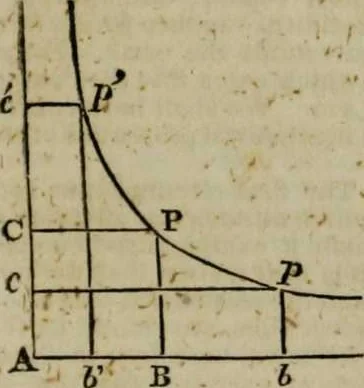
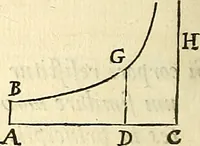
llelogram, whichis impossible. It is obvious that all that has now been saidof the^ixis A B applies equally to A C; therefore the twolines A B and A C are asymptotes to the curve. The asymptotes of curve lines are most readily deter-mined from the properties of their algebraic equations. Letus… … V 12 But the quantity under the ra- dical sign in this expression is always less than unitywhile x retains a finite value (for * cannot be less thanA); the value of the ordinate y is therefore always less than -jx- Now let a straight line A K be drawn throughthe centre A (the origin of the…
Humanities · Medicine · Science · Literature · Arts · Encyclopedias and dictionaries
Internet Archive · Medical Heritage Library · Public Domain Mark 1.0. Free to use for anything.