Aristarchus of Samos, the ancient Copernicus; a history of Greek astronomy to Aristarchus, together with Aristarchus's Treatise on the sizes and distances of the sun and moon (1913)
Heath, Thomas Little, Sir, 1861-1940, Aristarchus, of Samos. On the sizes and distances of the sun and moon. English & Greek. 1913 · Oxford : Clarendon press · leaf 276
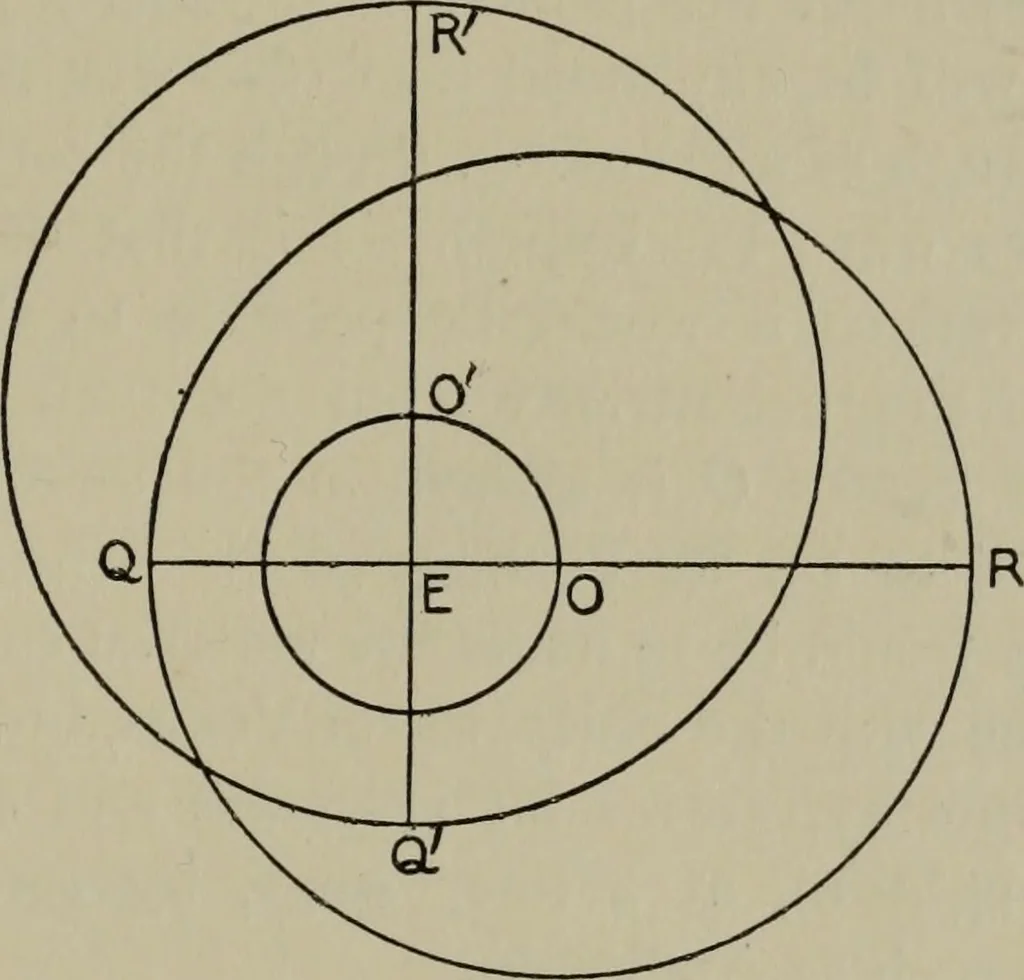
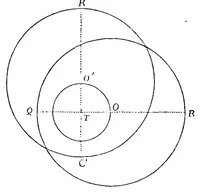
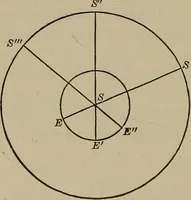
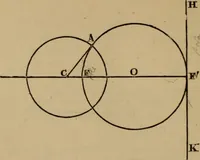
s and are entirely on one side of the earth, whereas thecircle described by Mars comprehends the earth which is inside it.The next possibility that would present itself would be that theplanet might move uniformly round an eccentric circle of somekind, a circle passing round the earth but with some… … Fig. 12. a planet moving on the eccentric circle. In opposition, therefore,Mars will be at Q, and the sun will be opposite to it, i.e. at somepoint on ER. If now the oppositions always occurred in the sameplace in the zodiac, i.e. in the same direction EQ, this hypothesiswould explain the…
Aristarchus, of Samos · Astronomy, Greek · Astronomers
Internet Archive · Public Domain Mark 1.0. Free to use for anything.