Dudley Observatory, American Astronomical Society, American Institute of Physics · New York [etc.] American Institute of Physics [etc.] · leaf 26
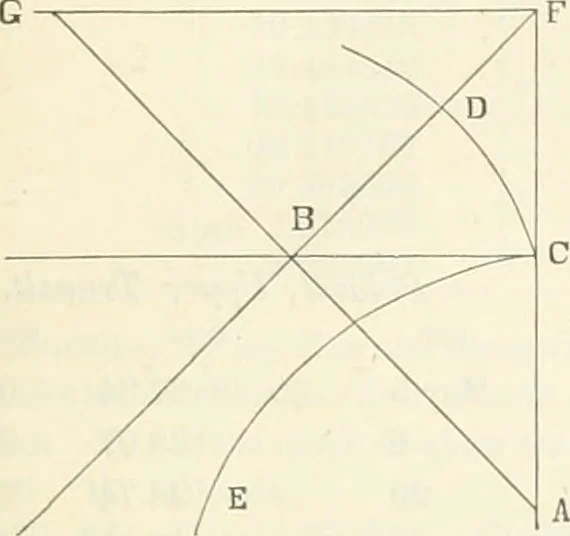
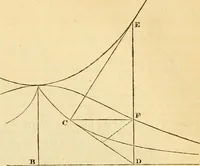
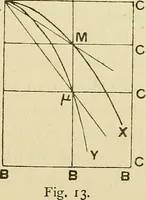
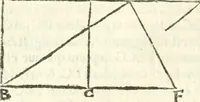
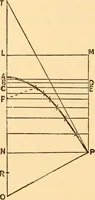
ed is nearer isoperimetry with the curve. The quadrilateral thus formed in a circumscribed hexagondiffers from isoperimetry with the circle about .08, the hexagonabout .32. (16.) The preceding results afford a neat geometrical modeof drawing a catenary. Draw a parabola by the process of (11). Draw… … and for the evolute of the catenary referred to the same axes, P = 2 F G, y = 2 A B, x> = — D F, s> = C F. Proof for the catenary : Geometrical investigation of thedifferentials gives d (B D) = cos 9 d (CB) = a cos <p d tan <j>. = a. d <p. sec qr, while in the catenary we have d x…
Astronomy
Internet Archive · Gerstein Library, University of Toronto · Public Domain Mark 1.0. Free to use for anything.