Astronomy in a nutshell, the chief facts and principles explained in popular language for the general reader and for schools (1912)
Serviss, Garrett Putman, 1851-1929, Rouben Mamoulian Collection (Library of Congress) DLC · New York, London, G.P. Putnam's sons · leaf 260
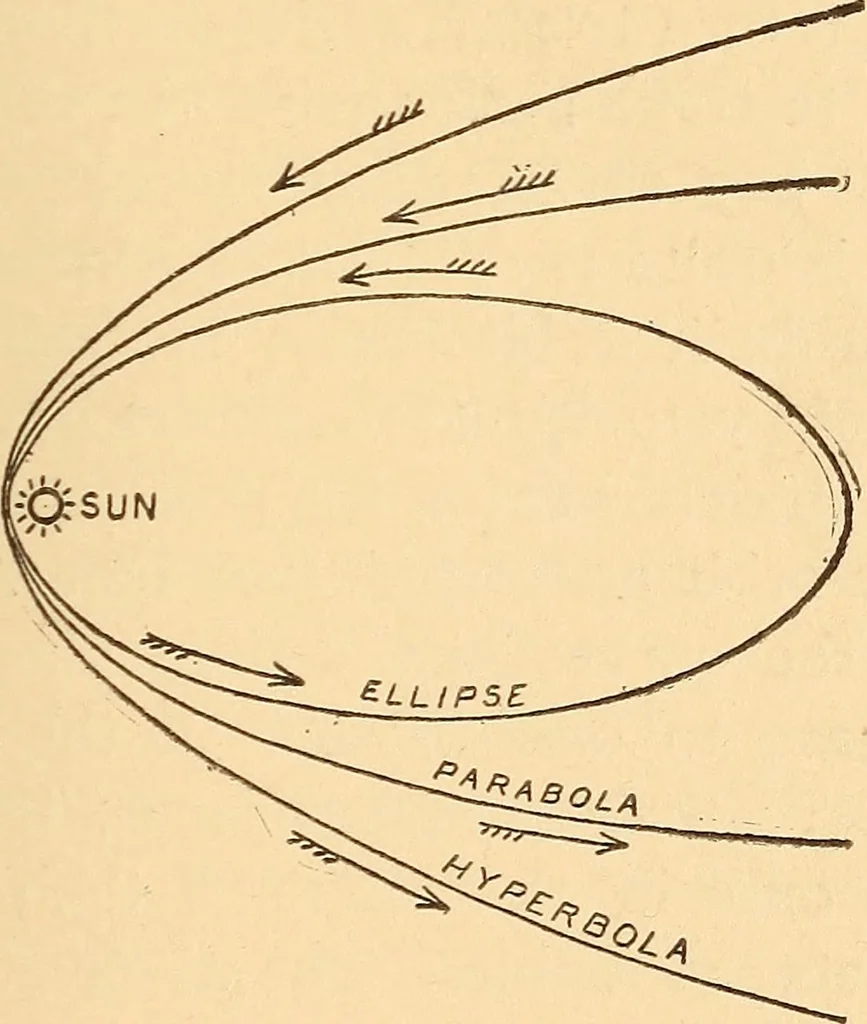
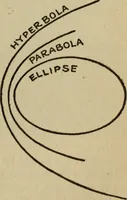
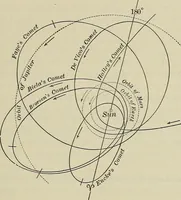
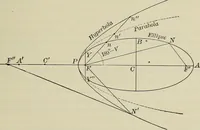
uit. In each case the sunis situated at the focus where the perihelion,or nearest approach, of the comet occurs,but only comets travelling in ellipticalorbits return again after having once beenseen. A comet moving in a parabola wouldgo back into the depths of space nearly inthe direction from… … Fig. 17. Ellipse, Parabola, and Hyperbola. The figure shows graphically why it is so difficult to tellexactly the form of a comets orbit. The three kinds ofcurves are nearly of the same form near the focus (theSun), and it is only in that part of its orbit that thecomet can be seen. Moreover a…
Astronomy
Internet Archive · Library of Congress · Public Domain Mark 1.0. Free to use for anything.