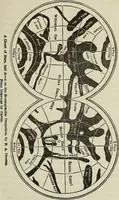
Astronomy in a nutshell, the chief facts and principles explained in popular language for the general reader and for schools (1912)
Serviss, Garrett Putman, 1851-1929, Rouben Mamoulian Collection (Library of Congress) DLC · New York, London, G.P. Putnam's sons · leaf 278
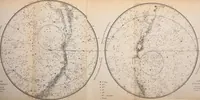
e stars,but they are not all of equal brightness.A more accurate photometry assumes azero magnitude, very nearly, representedby the star Arcturus, and makes the ratio2.512. Thus a star, nearly represented byAldebaran or Altair, which is 2.512 timesfainter than the zero magnitude, is of thefirst… … The Stars 221 brighter than the zero magnitude, is said tobe of a negative magnitude. The magnitudeof Sirius is — 1.6. There is only one otherstar of negative magnitude, Canopus, whosemagnitude is — 0.9. But for ordinary pur-poses one need not trouble himself with theserefinements. The stars are…
Astronomy
Internet Archive · Library of Congress · Public Domain Mark 1.0. Free to use for anything.