The book of chess: containing the rudiments of the game, and elementary analyses of the most popular openings (1882)
Agnel, H. R. (Hyacinth R.), 1799-1871, Staunton, Howard, 1810-1874 · New York, D. Appleton and company · leaf 340
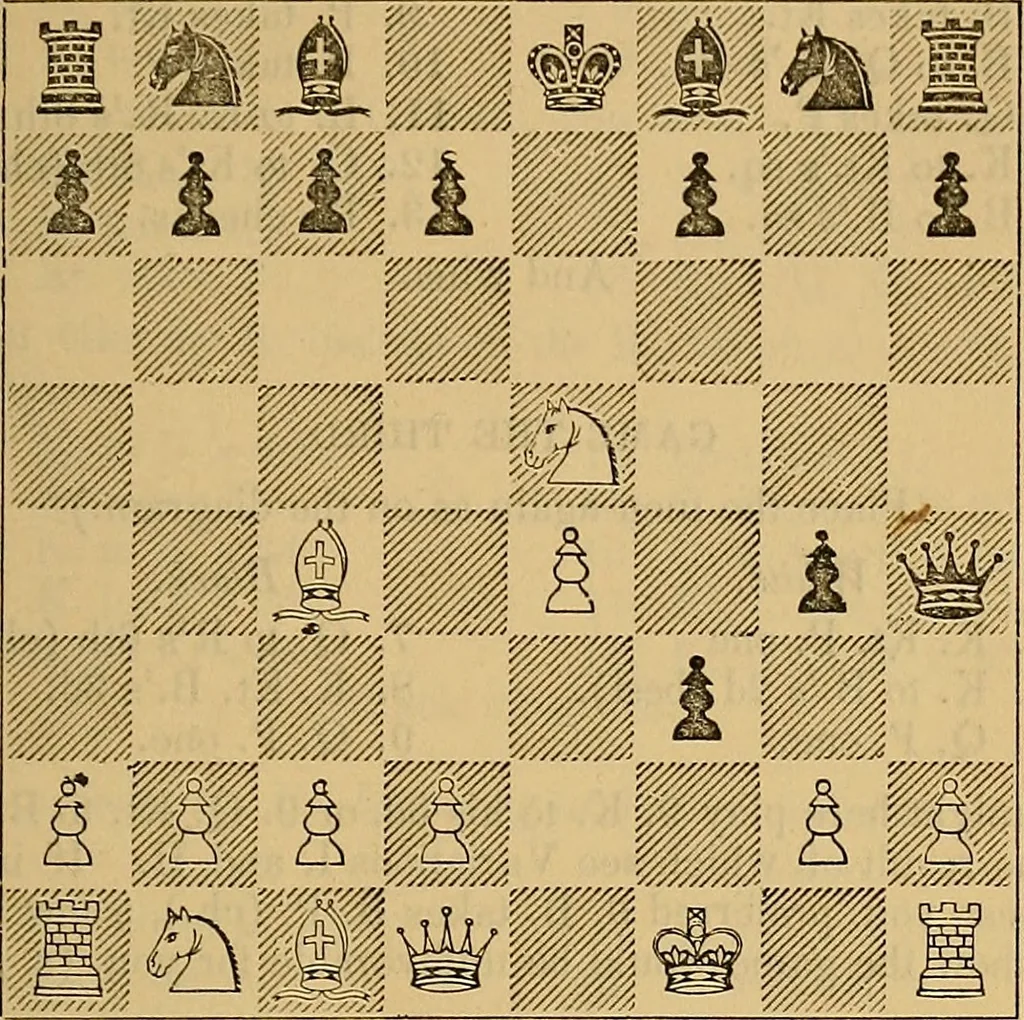
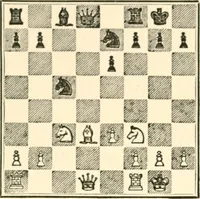
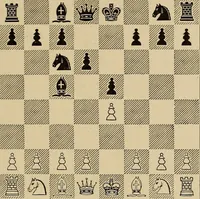
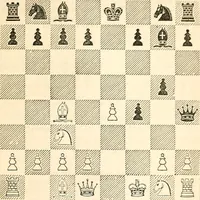
P. He has an easy game. 11. P. takes Q. 11. Q. P. one. 12. B. takes Kt. 12. B. takes B. 13. Kt. takes K. B. P 13. B. to K.s 6th (ch.) 14. K. to Kt.s 2d. 14. R. to B.s sq. 15. R. to B.s sq. 15. B. takes Q. P. He ought to win. The merit of working out these latter variations is due toMessrs.… … The diagram represents the position of the men up to the6th move of the preceding game. In this and the next twcgames, White deviates from the former, by not playing Q. P.two on his 7th move. White. Black. 7. B. takes K. B. P. (ch.) 7. K. to his 2d, 8, P, takes P. 8. Q. P. one. If at your 8th move…
Chess
Internet Archive · Library of Congress · Public Domain Mark 1.0. Free to use for anything.