The book of chess: containing the rudiments of the game, and elementary analyses of the most popular openings (1882)
Agnel, H. R. (Hyacinth R.), 1799-1871, Staunton, Howard, 1810-1874 · New York, D. Appleton and company · leaf 358
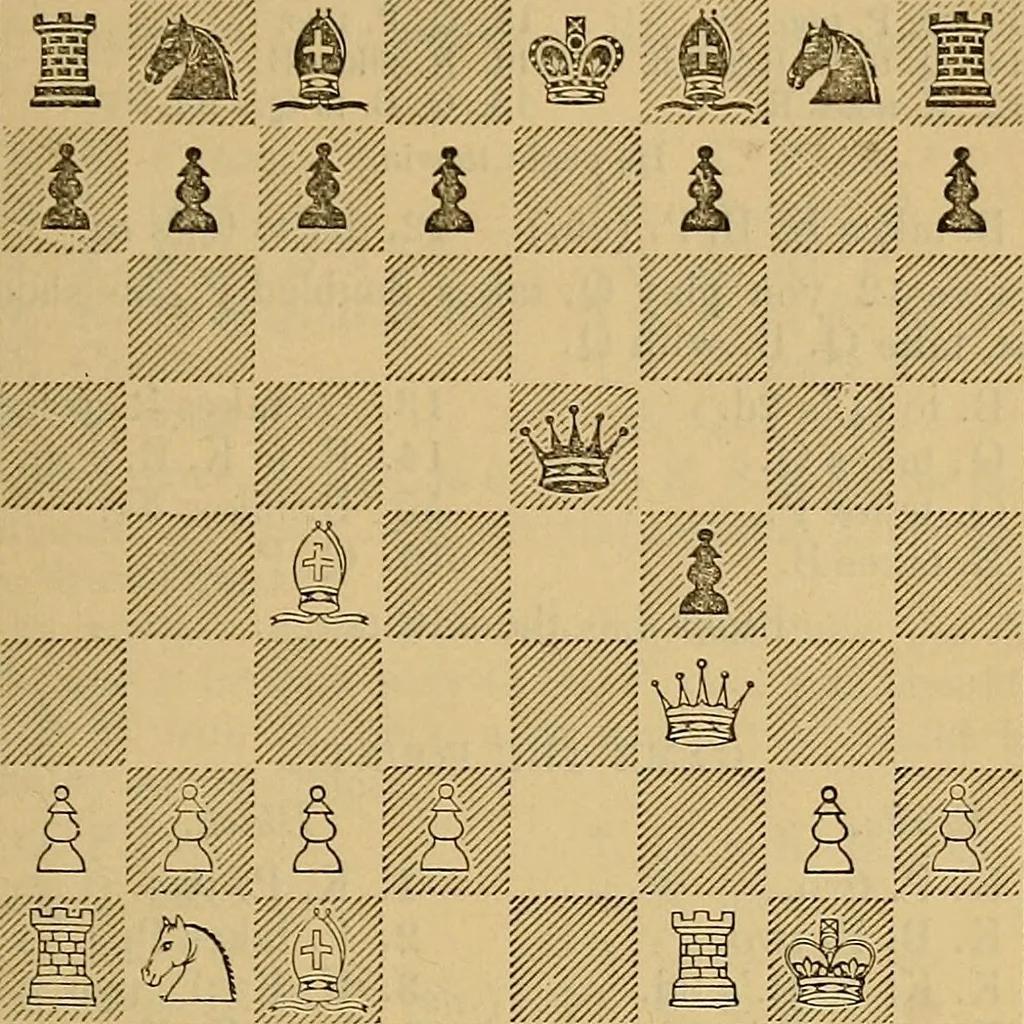
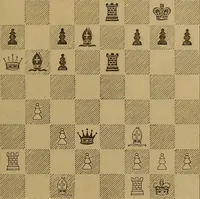
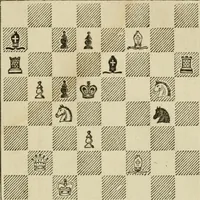
bject of afterwards advancing Q. Kt,P. two, and then mating with the P^ook or with the Queen. 26. Q. to B.s 4th (ch.) 26. Q. Kt. P. two. If he play 26. K. to R.s 4th, then follow 27. Q. R. P. luo,and 28. Q. Kt. P. two. But if he move 26. K. to Kl.s^d, you check with the Kt. at Q.s 5th, and mate in… … WHITE. 8. Q. Kt. P. one. 8. Q. takes R. (best). This move o< 8. Q. Kt. P. one, is a suggestion of Mr. Mc-Donnells. L is ingenious, but much inferior to the ordinarycourse of 8. Q. P. one. Instead of capturing the R., Black may nlay 8. Q Kt.to B.s .3d, and the following moves are probable :8. Q.…
Chess
Internet Archive · Library of Congress · Public Domain Mark 1.0. Free to use for anything.