The book of chess: containing the rudiments of the game, and elementary analyses of the most popular openings (1882)
Agnel, H. R. (Hyacinth R.), 1799-1871, Staunton, Howard, 1810-1874 · New York, D. Appleton and company · leaf 363
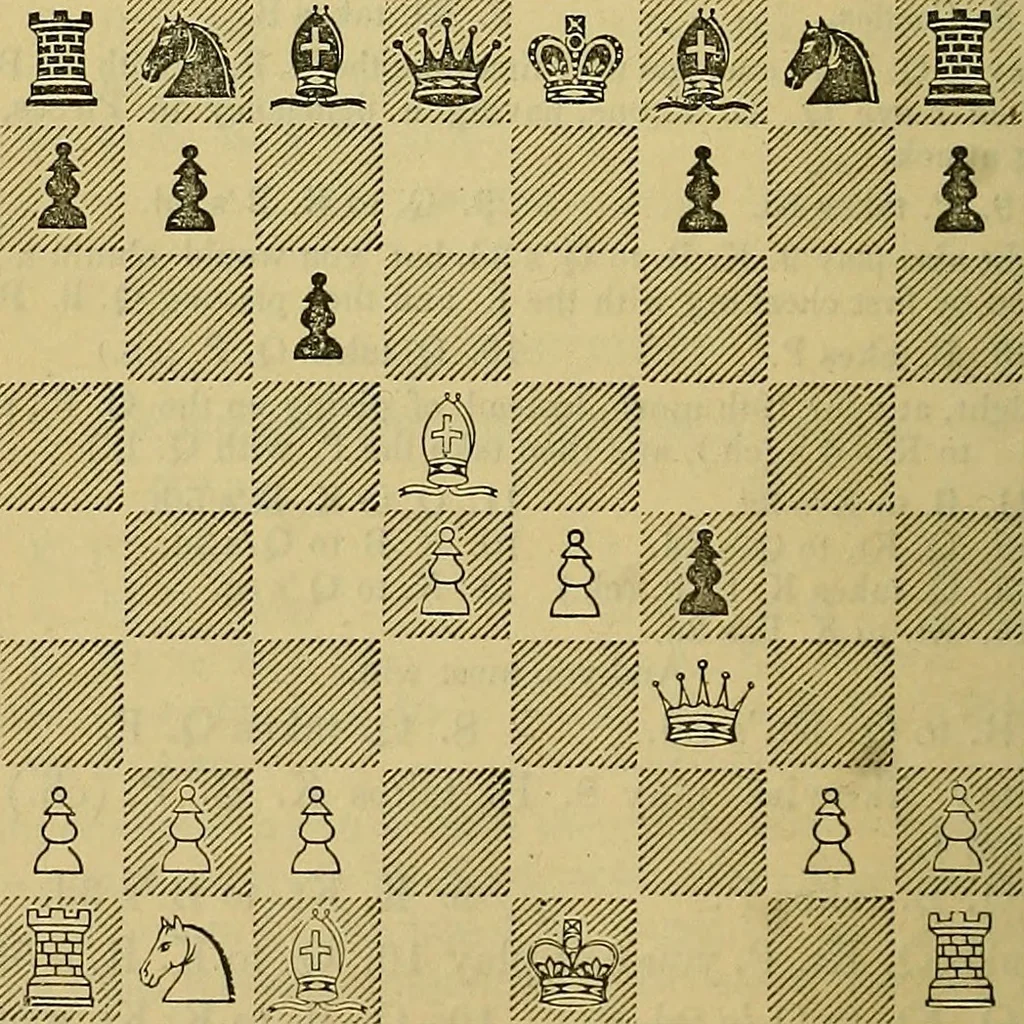
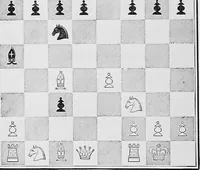
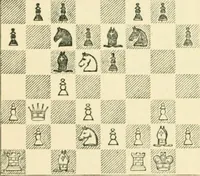
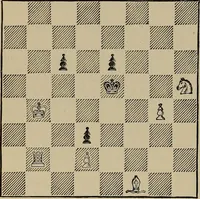
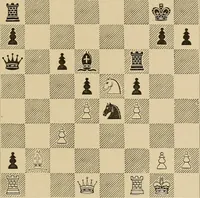
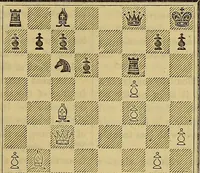
14. Kt. takes P. (Black can draw the game by checking first with his Rook at mcvs 14.and then with the Bishop at K.s 7th, on the next move.) 15. B. to K.s 3d. 15. R. to K.s sq. 16. Kt. to Q. B.s 4th. The game is equal. 12. Q. Kt. takes Kt. 12. Q. takes Kt. (ch.) If you play 12. Q.. takes B., he can… … i THE MUZIO GAMBIT. 353 In the previous example you adopted the safei course ofretreating the B. to Q. Kt.s 3d ; you may, however, acquirea very powerful attack by sacrificing the Bishop at this junc-ture. 8. B. takes K. B. P. (eh.) 8. K. takes B. 9. Q. B. takes P. 9. K. Kt. to B.s 3d. You may also…
Chess
Internet Archive · Library of Congress · Public Domain Mark 1.0. Free to use for anything.