The book of chess: containing the rudiments of the game, and elementary analyses of the most popular openings (1882)
Agnel, H. R. (Hyacinth R.), 1799-1871, Staunton, Howard, 1810-1874 · New York, D. Appleton and company · leaf 82
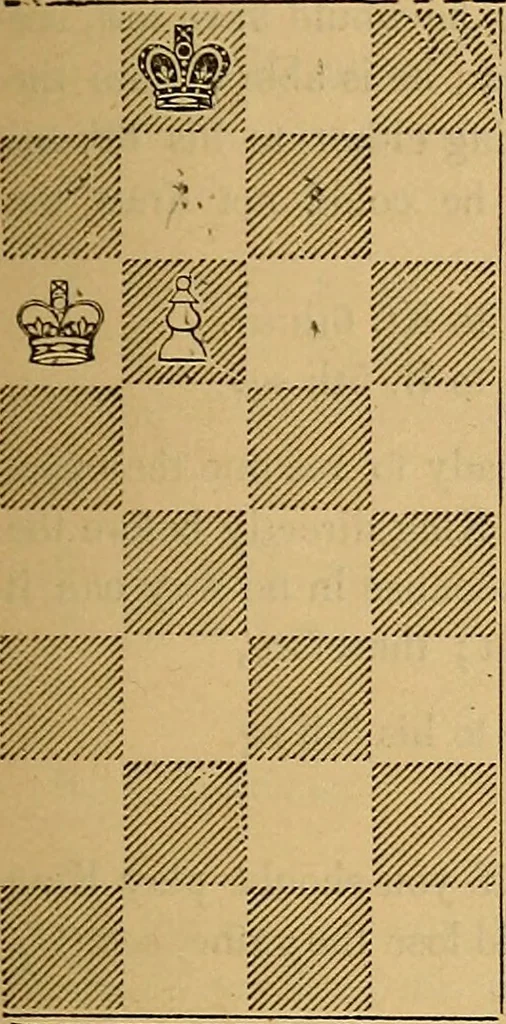
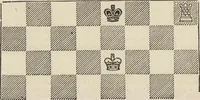
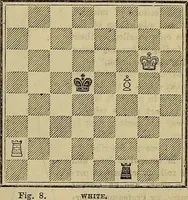
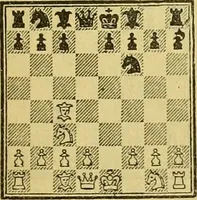
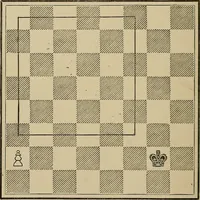
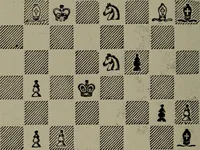
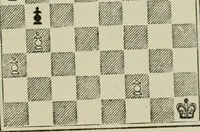
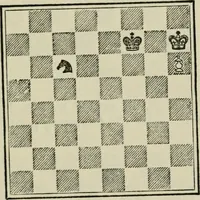
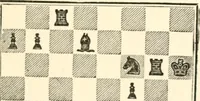
play, 2. K. to his sq. 2. You must not play K. to Q. 6th sq. or to K. B. 6th sq.,because he would gain theopposition as before, youought to moveK. to K. 6th sq. 3. Is compelled to move either to K. B. sq. or to Q. sq.,and by playuig in the former case to Q. 7th sq., and in tholatter to K. B. 7th… … In this position the winning oiIrawing the game depends en-tirely on the first move ; if Whitebegin, he will win; but if Blackbegin, the game will be drawn.Suppose White begin: 1. P. onesq. 1. K. to Kt. 2d sq 2. K. to his 7th sq. And afterwards advancing thePawn makes a new Queen andwins easily.…
Chess
Internet Archive · Library of Congress · Public Domain Mark 1.0. Free to use for anything.