The Clyde from its source to the sea, its development as a navigable river, the rise and progress of marine engineering and shipbuilding on its banks, and the leading historical, geological, and meteorological features of the Clyde Valley (1888)
Millar, W. J · London, Blackie · leaf 178
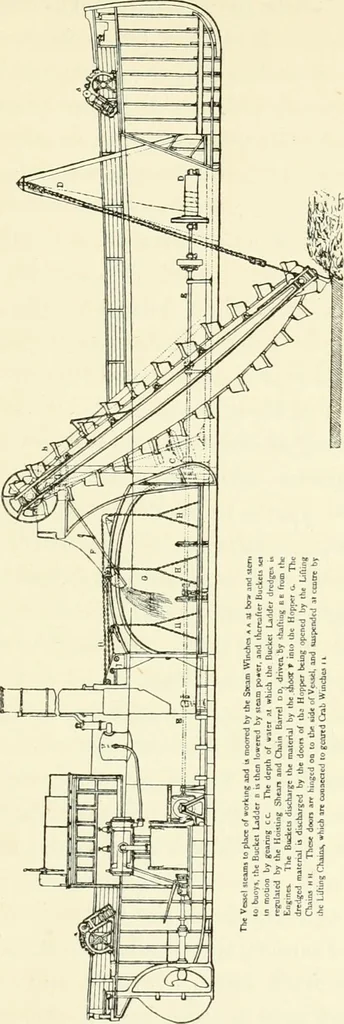
8hopper-barges from 35 to 65 nominal horse-power, witha fleet of punts and boats, several diving-bells, &c.Some of the dredgers are capable of working in 30 ft.of water, and have lifted nearly 400,000 cubic yards ina single year. During the year 1887, 1,319,344 cubicyards were dredged. The… … 156 THE CLYDE: FROM SOURCE TO SEA, now reached the hmit of draught permitted by the en-trance to New York. Measures, however, are being takento dredge away or rather disperse the bar to the extentof 2 ft., by a macliine called a dredging plough, which isdesigned to disturb the bar and disperse the…
Steam-navigation · Clyde River (Scotland)
Internet Archive · University of Toronto, Robarts Library · Public Domain Mark 1.0. Free to use for anything.