A compendium of astronomy; containing the elements of the science, familiarly explained and illustrated, with the latest discoveries. Adapted to the use of schools and academies, and of the general reader (1850)
Olmsted, Denison, 1791-1859 · New York, R. B. Collins · leaf 117
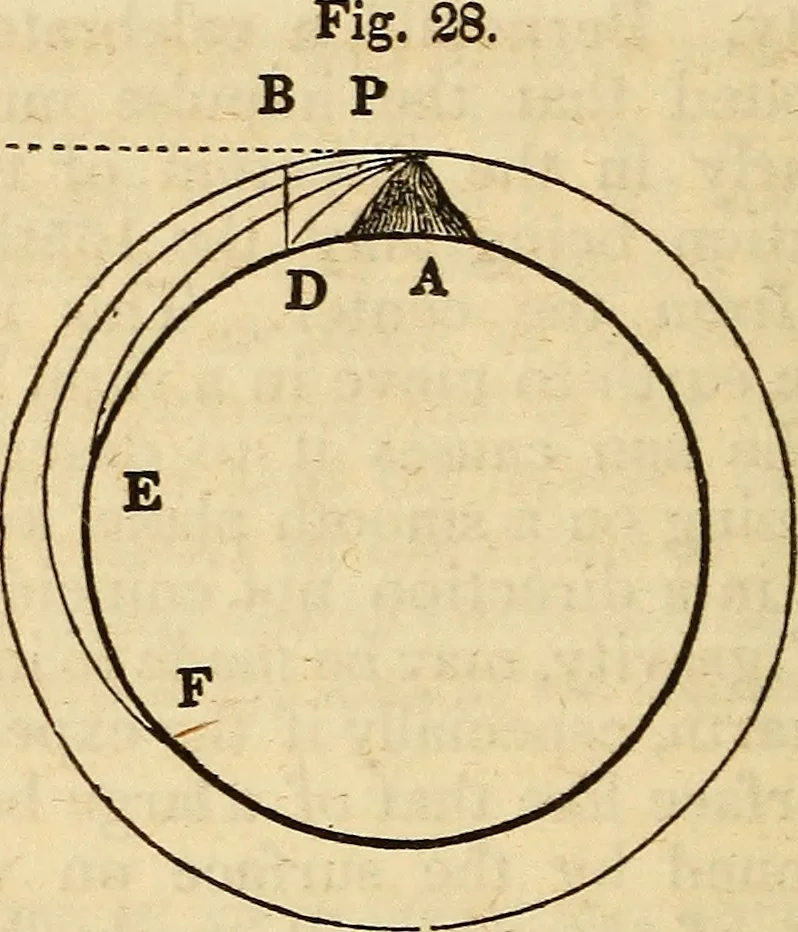
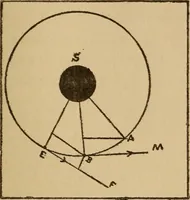
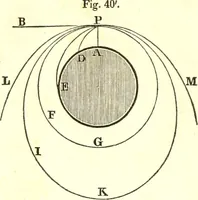
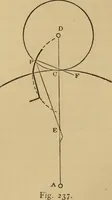
t receivingany impulse, it would descend to the earth in the direc-tion PA with an accelerated motion. But suppose thatat the moment of its departure from P, it receives animpulse in the direction PB, which would carry it to Bin the time the body would fall from P to A ; then un-der the influence… … the direction PB, it would describe a larger curve PE,or PF, or finally, it would go quite round the earth andreturn again to P. 133. The most simple example we have of the com-bined action of these two forces, is the motion of a mis-sile thrown from the hand, or of a ball fired from a can-non. It…
Astronomy
Internet Archive · Library of Congress · Public Domain Mark 1.0. Free to use for anything.