Ball, W. W. Rouse (Walter William Rouse), 1850-1925 · London, Macmillan · leaf 207
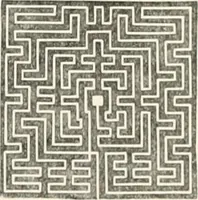
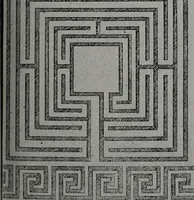
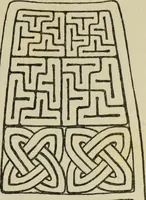
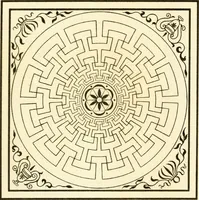
ing that, when traversed as a religious exercise, a pater or ave had to be repeated at every turning. After the Renaissance, such labyrinths were frequently termed Troy-Towns or Julian’s Bowers. Some of the best specimens, which are still extant, or were so until recently, are those at Rockliff… … The modern maze seems to have been introduced—probably from Italy—during the Renaissance, and many of the palaces and large houses built in England during the Tudor and the Stuart periods had labyrinths attached to them. Those adjoining the royal palaces at Southwark, Greenwich, and Hampton Court…