Gage, Alfred P. (Alfred Payson), 1836-1903 · Boston, London, Ginn · leaf 77
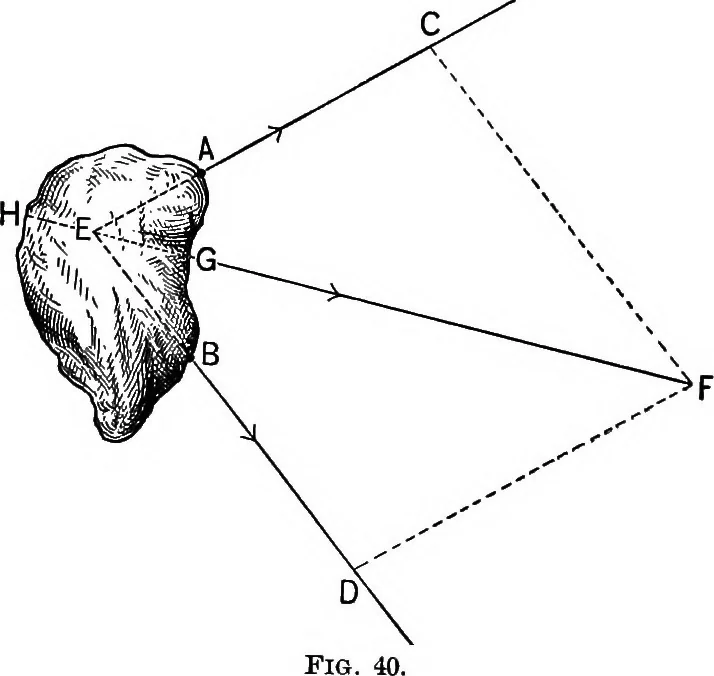
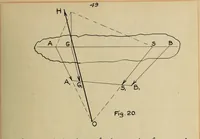
he equilibrant of theforces AB and AC, and the same line with the direction reversed (i.e.A E) represents the resultant. 67. Parallelogram, of forces. — If two forces applied at apoint he represented in magnitude and direction by the adjacentsides of a parallelogram, their resultant will be… … Thus, let two forces applied at points A and B of a stone-(Fig. 40) act in the directions AC and BD respectively.The direction of the resultant must pass through E, the pointwhere the lines of direction of the given forces produced back- COMPOSITION OF FORCES. 61 wards intersect. If, now, the lines…
Physics
Internet Archive · Cornell University Library · Public Domain Mark 1.0. Free to use for anything.