The seven follies of science; to which is added a small budget of interesting paradoxes, illusions, marvels, and popular fallacies. A popular account of the most famous scientific impossibilities and the attempts which have been made to solve them. With numerous illustrations (1912)
Phin, John, 1830-1913 · New York, D. Van Nostrand company · leaf 67
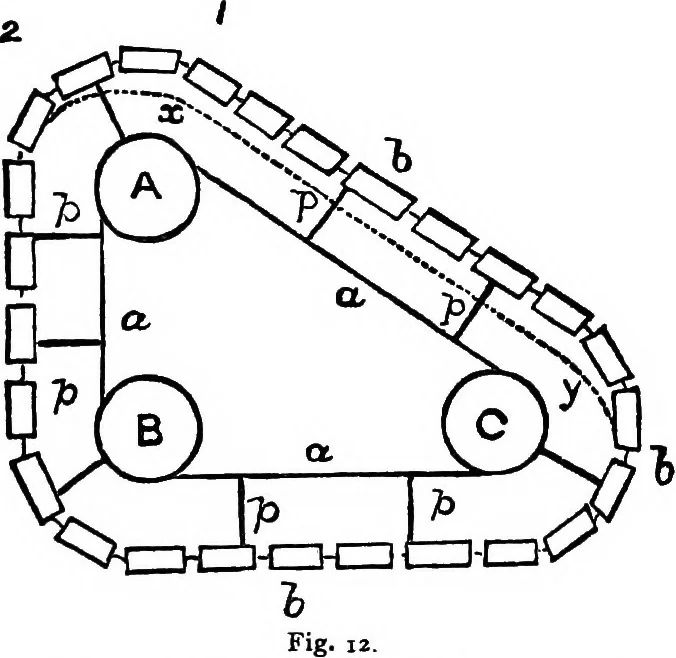
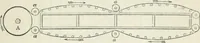
e ofperpetual motion, foimded on this principle of capillary at-traction, which, it is apprehended, will not be subject tothe general refutation applicable to those plans in whichthe power is supposed to be derived from gravity only.Sir Williams perpetual motion is as follows: Let ABC, Fig. 12, be… … to it, so that they must move together; every part of thisband and chain being so accurately uniform in weight thatthe perpendicular side AB will, in all positions of the bandand chain, be in equilibrium with the hypothenuse AC, onthe principle of the inclined plane. Now, if the frame inwhich these…
Scientific recreations · Geometry
Internet Archive · Cornell University Library · Public Domain Mark 1.0. Free to use for anything.