The heavens above: a popular handbook of astronomy (1882)
Gillet, J. A. (Joseph Anthony), 1837-1908 · New York, Chicago, Potter, Ainsworth, & Co. · leaf 163
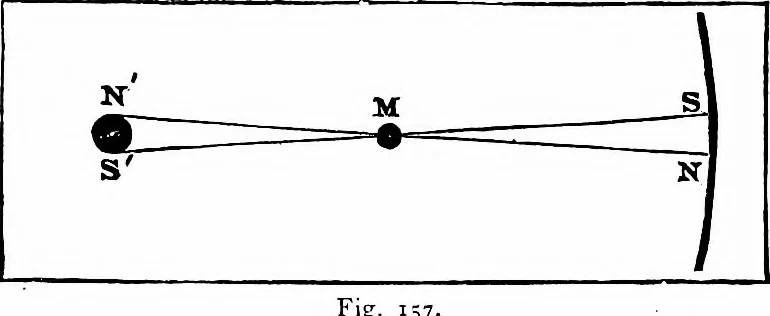
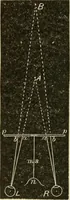
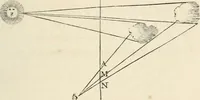
the earth. As the relativedistances of the planets from each other and from the sun arewell known, we can easily deduce the actual distance of thesun if we can find that of any of the planets. The two planetsusually chosen for this method are Mars and Venus. (i) The displacement of Mars in the sky,… … when in any other part of its orbit; and the planet will be leastdistant from the earth when it is at its perihelion point, and theearth is at its aphelion point, at the time of opposition. Thismethod, then, can be used to the best advantage, when, at thetime of opposition, Mars is near its…
Astronomy
Internet Archive · Cornell University Library · Public Domain Mark 1.0. Free to use for anything.