Cyclopedia of textile work : a general reference library on cotton, woollen and worsted yarn manufacture, weaving, designing, chemistry and dyeing, finishing, knitting, and allied subjects (1907)
Chicago : American school of correspondence · leaf 244
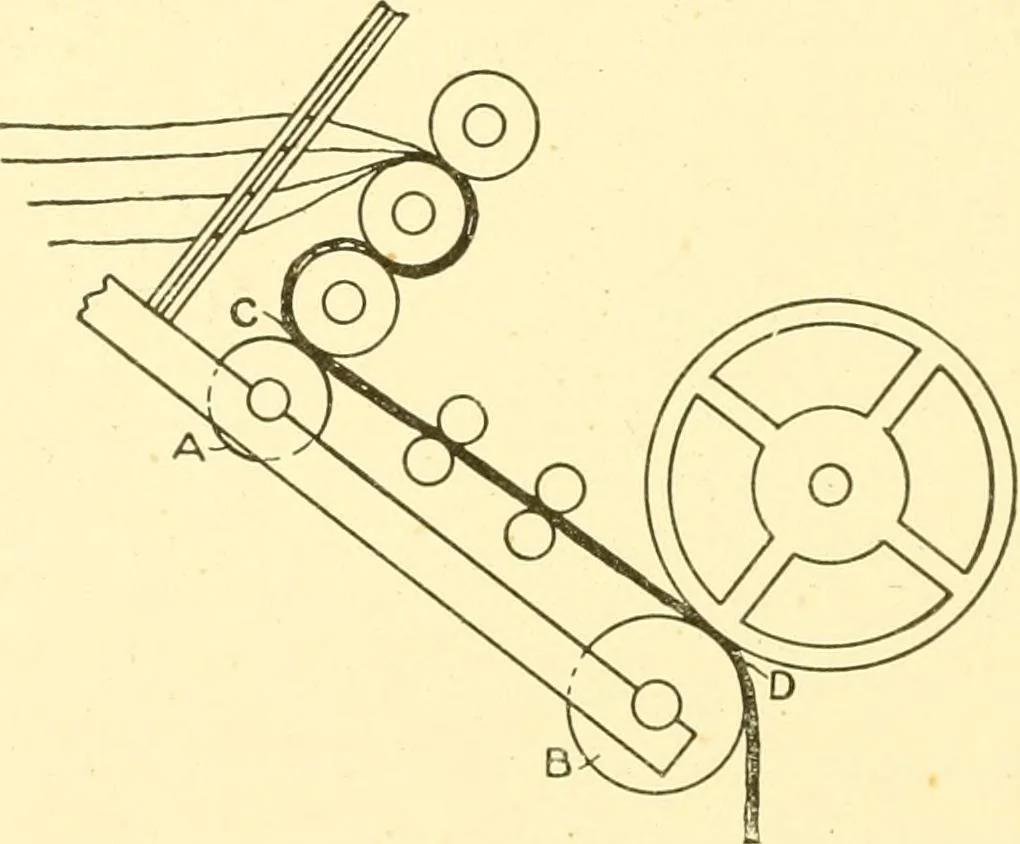
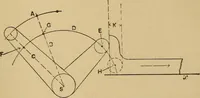
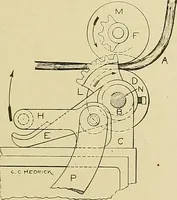
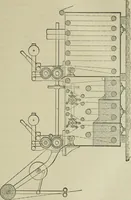
n:Divide the constant by the draft. Reversing the above example saythe draft recjuired is G. 190.5 -^ 6 = 32 approximately Twist. As the slivers are so thick from the first part of the draw-ing, and in fact up to the roving frame, no attempt is made to figurethe exact twist, all that is required… … Fig. i24. End View of Rolls Showing Ratch. of the back rolls at C and the nip of the front rolls at D. To hivea sound sliver free from thick and thin places, it is important that theratch be set correctly. The front rolls are stationary, but the back rolls can be movednearer to or farther from the…
Textile industry · Textile fabrics
Internet Archive · UMass Dartmouth, Claire T. Carney Library · Public Domain Mark 1.0. Free to use for anything.