Cyclopedia of textile work : a general reference library on cotton, woollen and worsted yarn manufacture, weaving, designing, chemistry and dyeing, finishing, knitting, and allied subjects (1907)
Chicago : American school of correspondence · leaf 18
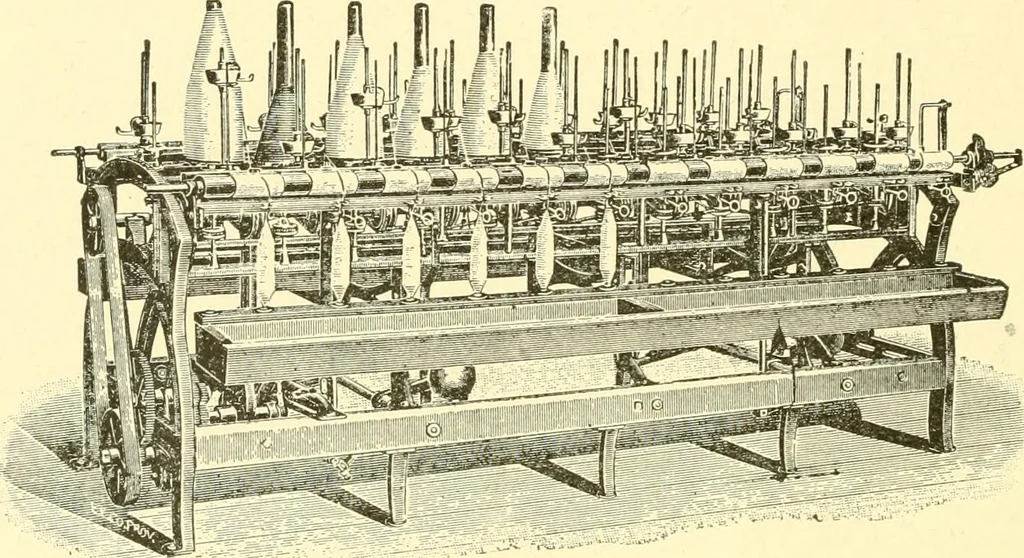
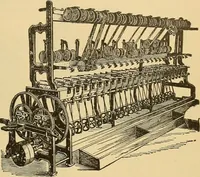
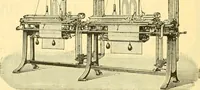
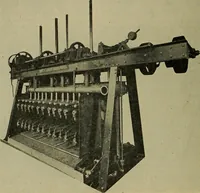
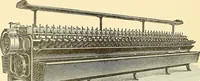
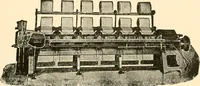
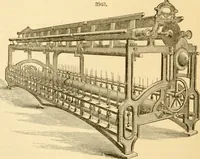
Hard or cottonyarns are in most cases purchased in the market,— such yarns areused for ribbed goods, balbriggans, etc.,— Ijut both kinds come tothe knitter on jack bobbins or cops, and to facilitate the knitting-are wound off on a much larger bobbin called a winder bobbin.The greatest care should… … Fig. 1. Cone Winder. Winding. When an end breaks down on a winder, the oper-ator should not be allowed to flip the end on to the partly woundbobbin and let it go, because the result is almost sure to be a press-off when the yarn runs out on the knitting frame, especially whenthe knitting frame is…
Textile industry · Textile fabrics
Internet Archive · UMass Dartmouth, Claire T. Carney Library · Public Domain Mark 1.0. Free to use for anything.