An elementary treatise on mechanics, embracing the theory of statics and dynamics, and its applications to solids and fluids (1849)
Smith, Augustus William, 1802-1866 · New York, Harper · leaf 117
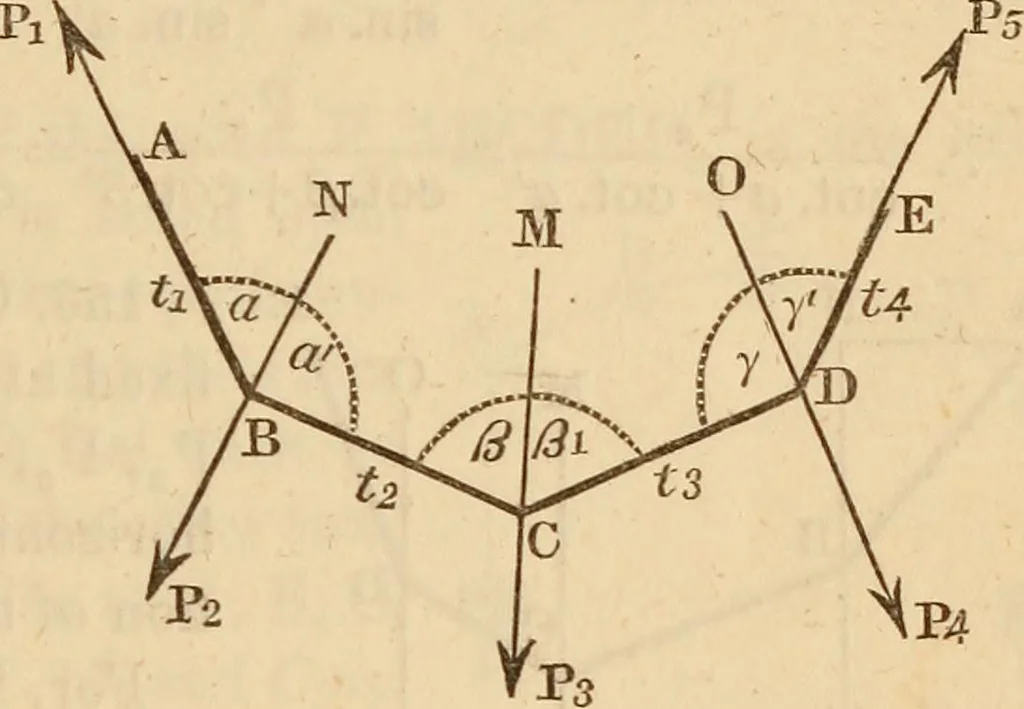
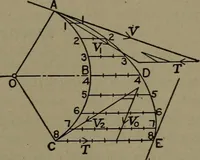
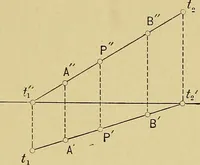
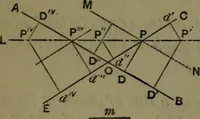
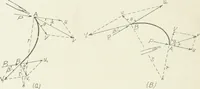
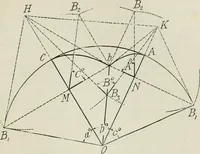
ces (Art. 70), or, the sum of all the forces re-solved in any two rectangular directions must be zero. The form which the cord takes under the influence of theseveral forces is called a, funicular polygon. 151. Prop. Required the relations of the forces which, actingon a cord in one plane, keep it… … Then (Art. 147) tx : P2 : also, t2 : P3 : &c, t2 = sin. a sin. (a-\-a) : sin. a; (a)t3= sin. (3: sin. ((3+(3) : sin. j3, (a1)&c. From (a) we obtain t^=V0 (a1) sin. a 2 sin. (a-\-a) 8JD.0 2 rs,sin.(j3+i3/)&c, ,and t2=~P, sin. a ■jr, and£3=P sin. (a+a1) sin. (3 sin.^/*) &c. Equating…
Mechanics, Analytic
Internet Archive · Library of Congress · Public Domain Mark 1.0. Free to use for anything.