Elements of analytical geometry and the differential and integral calculus (1856)
Robinson, Horatio N. (Horatio Nelson), 1806-1867 · Cincinnati : J. Ernst · leaf 89
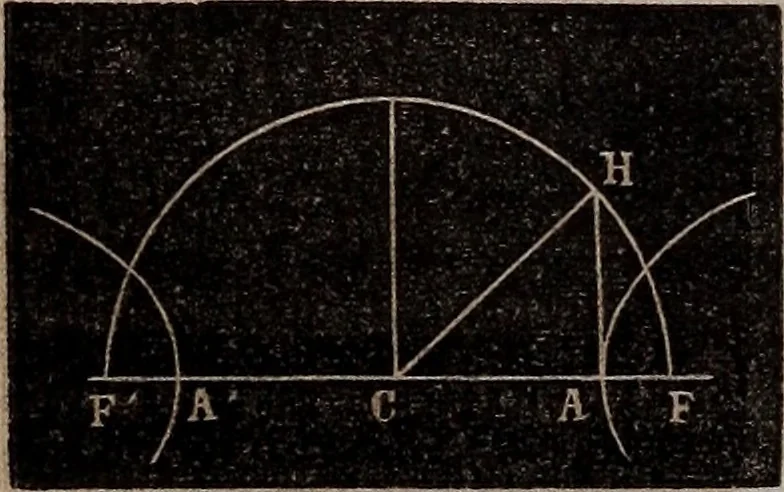
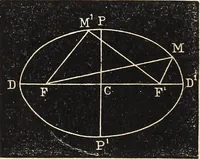
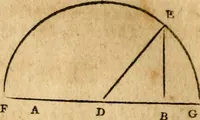
therefore we may assume this value equal to—B^. Then the equation becomes This form is preferred to the former one on account of itssimilarity to the equation of the ellipse,—the difierence is only inthe negative value of B^. Because A^—c^ =—B^, A^+B^ —c^. Now to show the geometricalmagnitude af B,… … THE HYPERBOLA.PROPOSITIO^N^ n. To determine the figure of the hyperbola from its equation.Resuming the equation 81 From which we find y-
Geometry, Analytic · Calculus
Internet Archive · Library of Congress · Public Domain Mark 1.0. Free to use for anything.