Elements of astronomy: accompanied with numerous illustrations, a colored representation of the solar, stellar, and nebular spectra, and celestial charts of the northern and the southern hemisphere (1875)
Lockyer, Norman, Sir, 1836-1920 · New York, D. Appleton and company · leaf 163
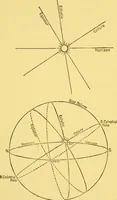
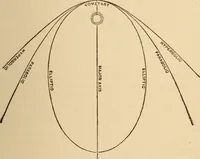
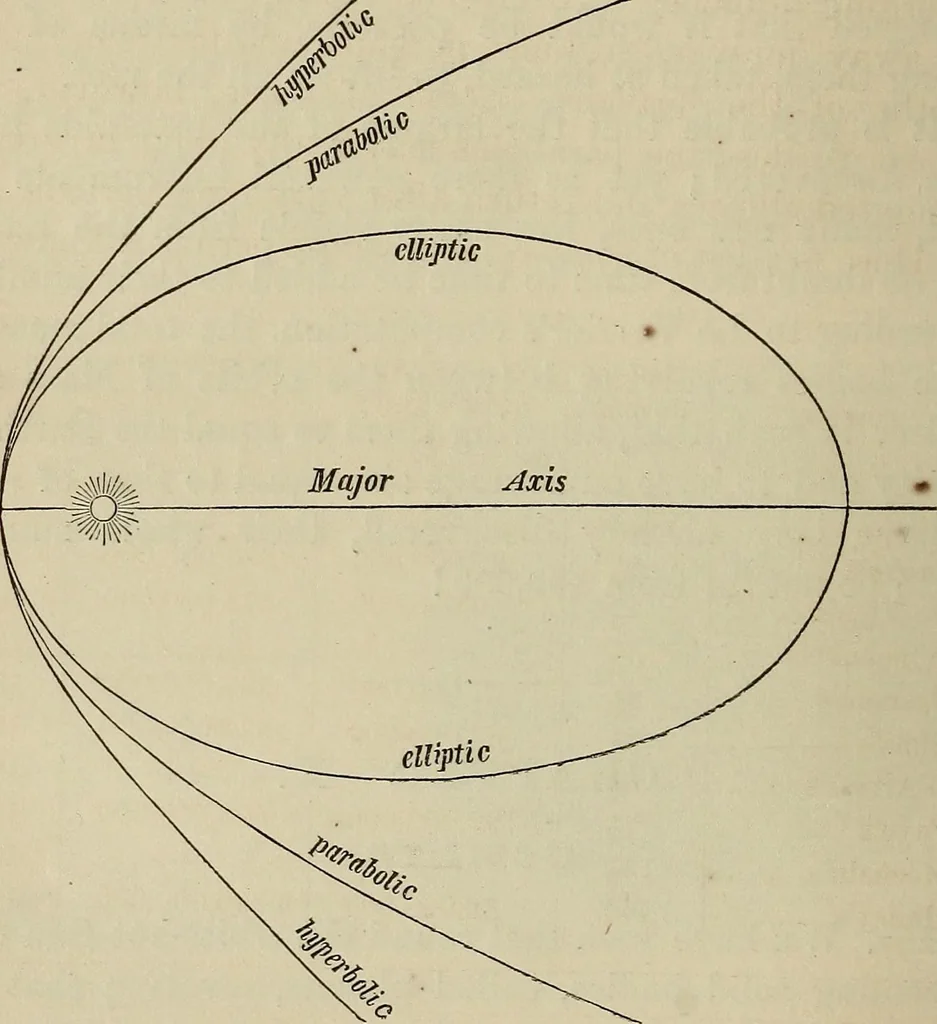
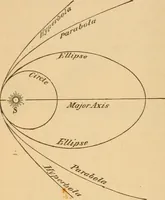
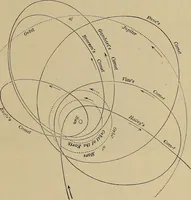
the shape of their orbits is oval or elliptical; andthat they all move in one direction,—that is, from west toeast. But these are not the only bodies which revolve roundthe Sun. There are, besides, masses, probably white-hot,called Comets (from the Greek tiou,r\rr\q, long-haired)^which shine by… … Fig. 65.—Cometaet Orbits. 297. What have we learned with respect to the planets ? What other bodieshave we now to consider? How do comets differ from planets? 298. What THE COMETAEY OKBITS. 157 move round the Sun in the same direction as the planets,others revolve from east to west. 298. Orbits of…
Astronomy
Internet Archive · Library of Congress · Public Domain Mark 1.0. Free to use for anything.
![An illustration from M. Vitrvvii De architectvra libri decem : nuper maxima diligentia castigati atq[ue] excusi : additis Iulij Frontini De aqueductibus libris propter materiae affinitatem (1522)](https://img.insideoutlibrary.com/img/200/ia-mvitrvviidearchi00vitr-325-113.webp)