The elements of natural philosophy : copiously illustrated by familiar experiments and containing descriptions of instruments, with directions for using : designed for the use of schools and academies (1856)
Sprague, A. W. (Alfred White), 1821-1891 · Boston : Phillips, Sampson & Company · leaf 262
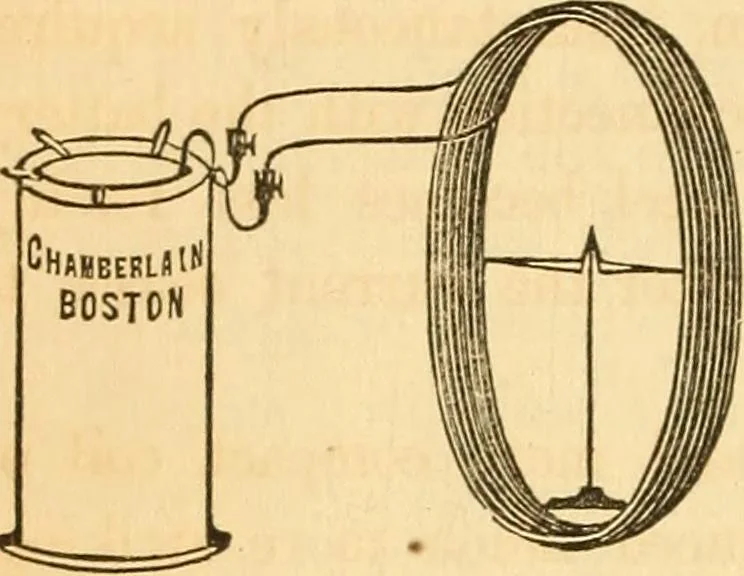
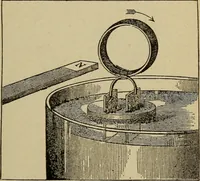
he magnetism of the earth is also explained, ac-cording to the theory of Ampere, by supposing the existence What does Ampei-es theory of magnetisni suppose? DifTerence between amagnet and a mere bar of iron ? AVhat is said of currents of electricity movingin the same and in an opposite direction ?… … of currents of electricity constantly traversing it near its sur-face, from east to west, in a direction at right angles with aline joining the magnetic poles. These currents are regardedas thermo-electric, and produced by the action of the sunsheat in his daily circuit. The action of such a…
Physics
Internet Archive · Library of Congress · Public Domain Mark 1.0. Free to use for anything.