The elements of natural philosophy : copiously illustrated by familiar experiments and containing descriptions of instruments, with directions for using : designed for the use of schools and academies (1856)
Sprague, A. W. (Alfred White), 1821-1891 · Boston : Phillips, Sampson & Company · leaf 329
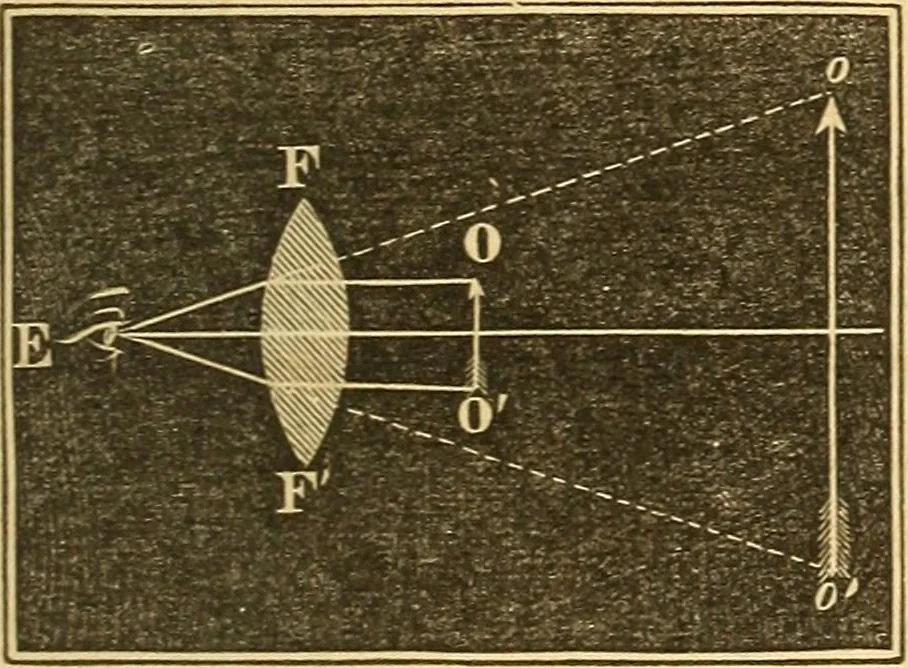
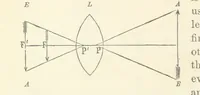
cts may be converged tothe eye, so as to render thesevisible. The magnifyingprinciple of this microscopemay be illustrated by Fig.250. 308. Let 0 0, Fig. 250,be a minute object placedbefore the double-convex lens, F F, at or just without its prin-cipal focus, but too near the eye to be seen by it… … How may this instrument be regarded ? Why cannot minute objects near theeye be distinctly perceived ? What is meant by the limit of distinct vision, andhow far is this usually from the eye ? AVhat use does the microscope serve ?What is a Simple Microscope? Explain the manner in which the…
Physics
Internet Archive · Library of Congress · Public Domain Mark 1.0. Free to use for anything.