The elements of theoretical and descriptive astronomy, for the use of colleges and academies (1901)
White, Charles J. (Charles Joyce), 1839-1917 · New York, J. Wiley & sons; · leaf 195
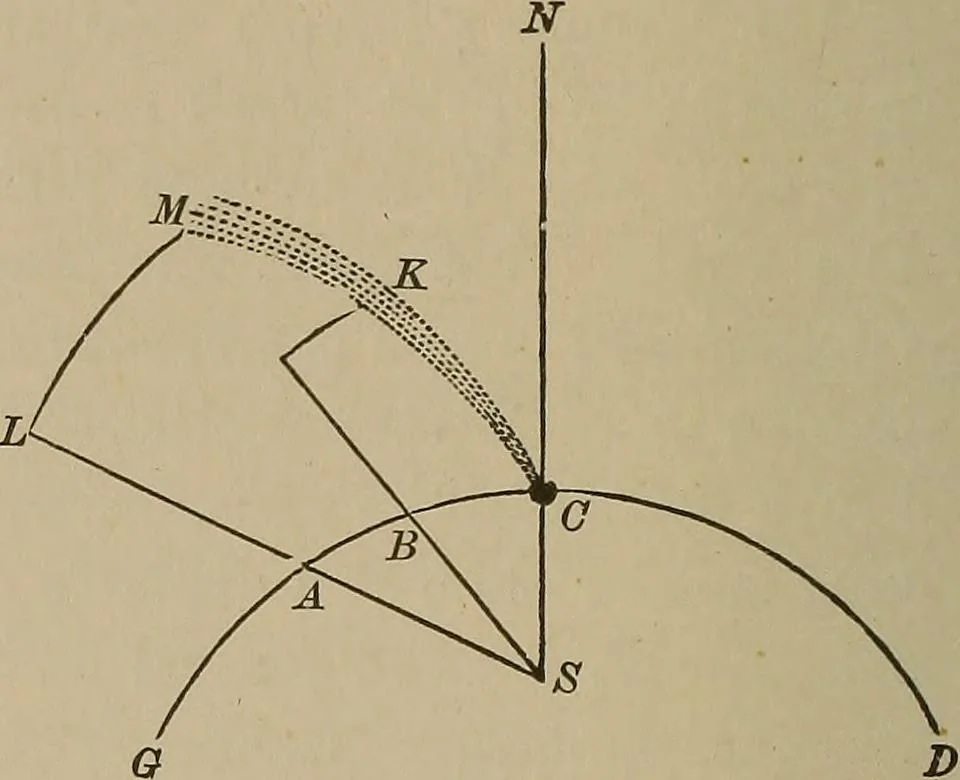
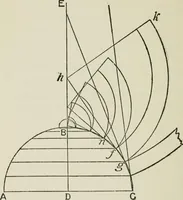
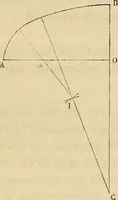
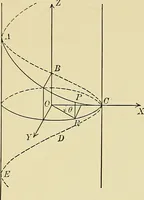
ards that part of space which thecomet is leaving. If we assume the existence of a solar repul-sive force, similar to that mentioned in the preceding article,this peculiarity of shape may be thus explained. In Fig. 72, letS be the sun, and GODa portion of the orbit of acomet. When the nucleusis at… … ing. 72. ing the motion which it had in common with the nucleus, will befound at some point M. In the same way a particle driven fromthe nucleus when it is at B will be found at some point K, whenthe nucleus reaches C: and, in general, when the nucleus is at Cthe tail will not lie in the direction…
Astronomy
Internet Archive · Library of Congress · Public Domain Mark 1.0. Free to use for anything.