Elements of theoretical and descriptive astronomy, for the use of colleges and academies (1901)
White, Charles J · New York: J. Wiley & sons · leaf 69
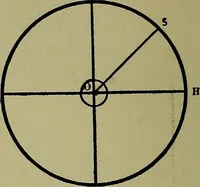
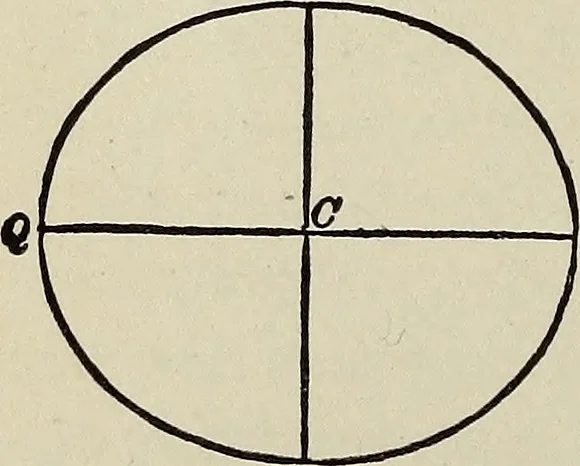
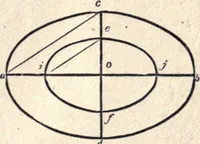
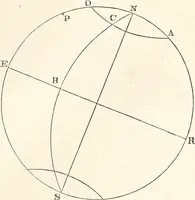
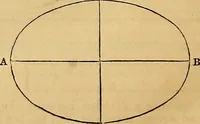
ed to advance a greater numberof miles at the pole than at the equator, we conclude that the cur-vature of the meridian is less at the pole than at the equator. Now, p this same inequality in its curvature is also a peculiarity of the ellipse: and hencewe infer that the form of the earths… … DENSITY. 63 least; and the equatorial diameter of the earth, EQ, correspondsto the major axis of an ellipse, at the extremities of which thecurvature is the greatest. The form of the earth, then, is that of the solid which wouldbe generated by the revolution of an ellipse about its minoraxis, which…
Astronomy
Internet Archive · Public Domain Mark 1.0. Free to use for anything.
![An illustration from Cosmographia Francisci Mavrolyci Messanensis Sicvli : in tres dialogos distincta, in quibus de forma, situ numerʹoq[ue] tam coelorum q[uam] elementorum, alijsq[ue] rebus ad astronomica rudimenta spectantibus satis disseritur (1543)](https://img.insideoutlibrary.com/img/200/ia-cosmographiafran00maur-162-0.webp)