Inside Out Library · Explore
The fundamental principles of Old and New World civilizations : a comparative research based on a study of the ancient Mexican religious, sociological and calendrical systems (1901) Nuttall, Zelia, 1858-1933 · Cambridge, Mass. : Peabody Museum of American Archaeology and Ethnology · leaf 52
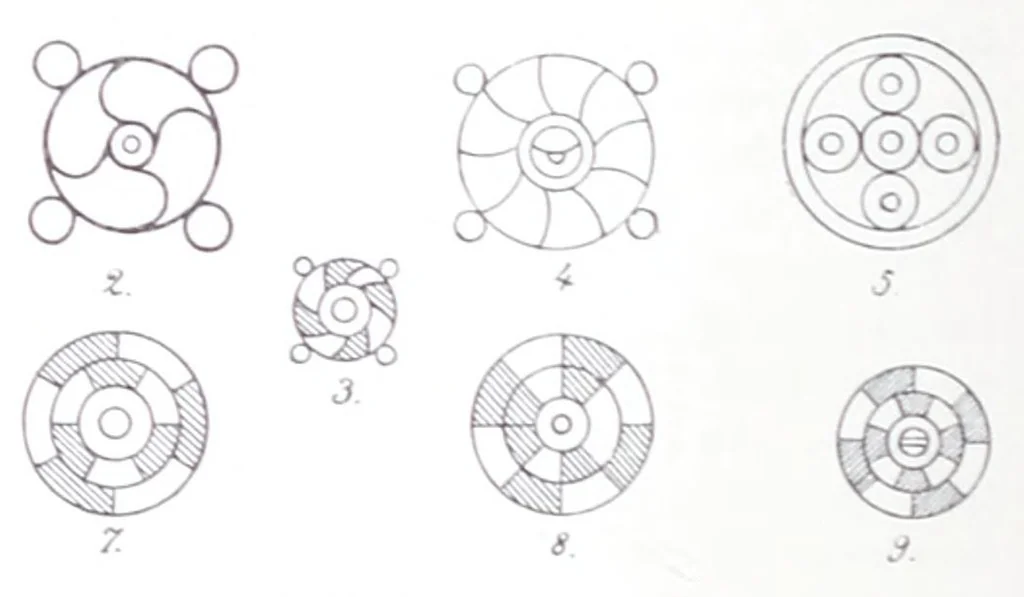
two in one,” of the Above and Below united in the Centre. I venture to suggest that the dragon-fly was employed as a cross¬ symbol in an analogous manner, on the Algonquin garment pre¬ served at the Riksmuseum, Stockholm, and described by Dr. Hjalmar Stolpe in his admirable study on American art… … ®@ ©® a round hole which, when the shell-disc is held aloft, lets a ray of light shine through and furnishes an apt presentation of a star. This and the cross furnish analogies to the Mexican and Maya symbols of Polaris which are too obvious to need to be emphasized. Nor do these gorgets alone… Civilization -- History · Mayas -- Antiquities · Calendar, Mexican · Mythology · Calendar · Swastikas
Internet Archive · Getty Research Institute · Public domain (published before 1931). Free to use for anything.
More pictures from The fundamental principles of Old and New World civilizations : a comparative research based on a study of the ancient Mexican religious, sociological and calendrical systems
More like this