Grave-mounds and their contents; a manual of archaeology, as exemplified in the burials of the Celtic, the Romano-British, and the Anglo-Saxon periods (1870)
Jewitt, Llewellynn Frederick William, 1816-1886 · London : Groombridge · leaf 38
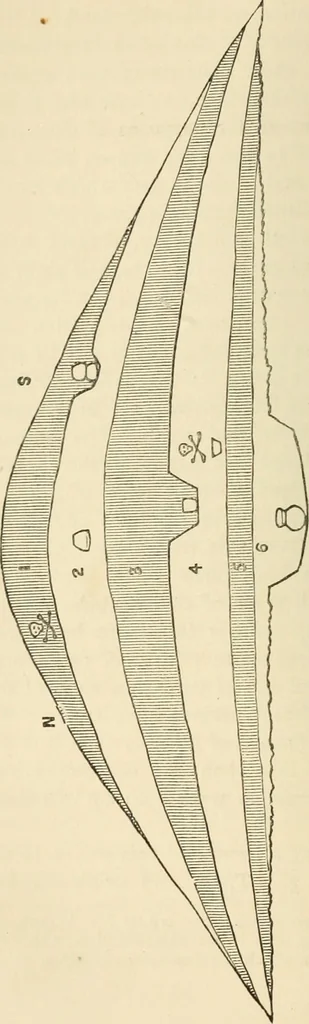
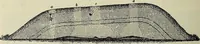
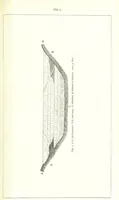
which was formed of alternate layers of chalk andearth, exhibited no less than six successive sepulchraldeposits.* The interments were both by inhumation andcremation. Another example of a barrow of this period is shown insection on the fig. 3. There had originally been four * This remarkable… … •a g ^ c ^ S (U *^ a. <L) -M <u O 0) •a c 1) i2i c rt , ^ <u •^ _« ^ Xi 0) ^ Ol 3 <u-a .S o J3(3 .s ;^ 3J3 <u -a o JJ (J o ^ 3 <u 3 .ti 1 o co 3 t3 ^ 1)O ^S ^ rt o 05 ^ o W h-1 w u en ^ :=: -ii w N fO ■<*• in vo O CONSTRUCTION OF GRAVE-MOUNDS. Q small mounds, or barrows, formed…
Mounds -- Great Britain · Megalithic monuments -- Great Britain · Great Britain -- Antiquities
Internet Archive · California Digital Library · Public Domain Mark 1.0. Free to use for anything.