Richter, Gisela Marie Augusta, 1882-1972, Metropolitan Museum of Art (New York, N.Y.) · New York [The Gilliss Press] · leaf 504
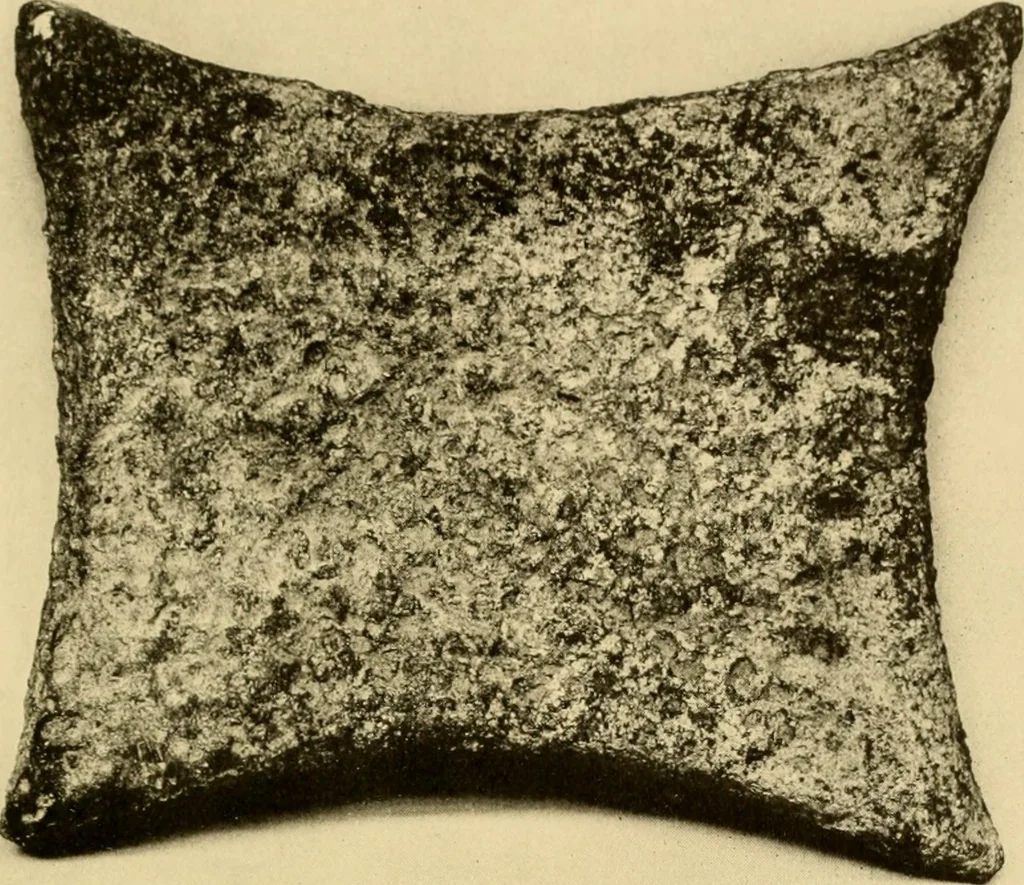
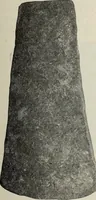
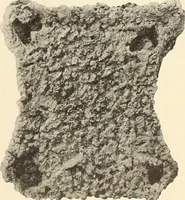
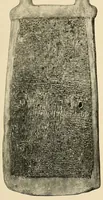
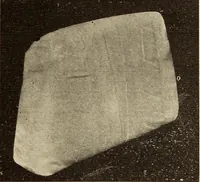
ntedout, is that of a light Babylonian talent. The material is bronze, not copper,according to the following analysis made by Mr. W. Kuckro, the Museumchemist: Copper 89.9%, Tin 7.5%, Lead 1.5%, Iron & Aluminium .5%,Silika .6%. Length, \-]\ in. (44.5 cm.). Width, 14I in. (37.5 cm.). Thickness,… … 1810 loll TUBULAR SHAFT, perhaps used as a sceptre-stem. It has Sceptres two pairs of opposite holes. Late Minoan I period. Illustrated, p. 458. AND For an exactly similar example, also from Gournia, cf. H. B. Hawes, MACESGournia, pi. IV, 66. Length, 43^ in. (10.3 cm.). From Gournia, Crete. Gift of…
Bronzes · Art, Ancient
Internet Archive · Wellesley College Library · Public Domain Mark 1.0. Free to use for anything.